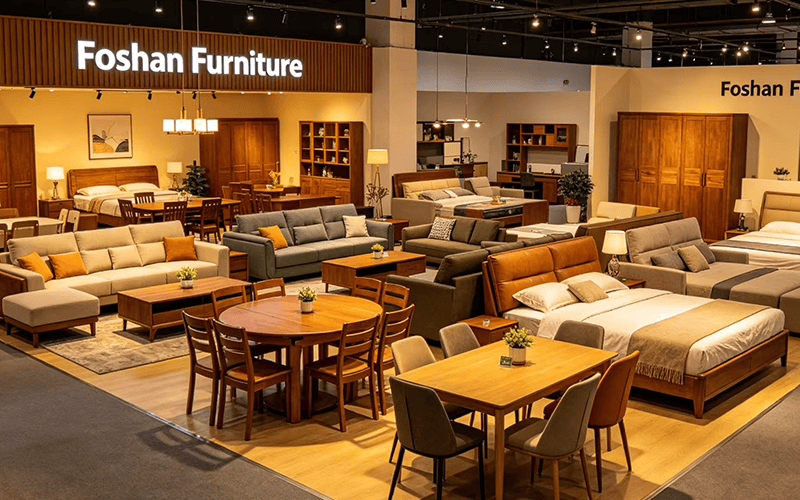
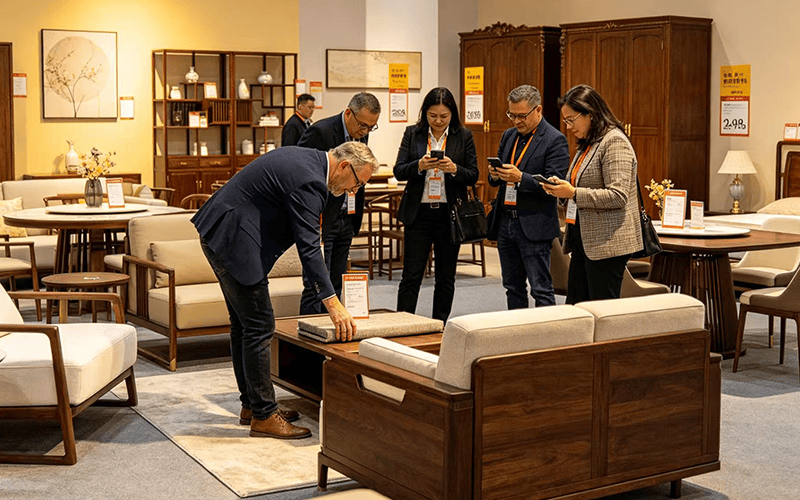
Foshan is the top furniture sourcing base in China, yet most new overseas buyers feel confused
facing countless showrooms, factories and traders. We break down how to choose between style
sourcing and factory sourcing, explain the differences between pure processing factories and
service-oriented suppliers. Whether you run Amazon stores, brand online shops, warehouse sales,
brand distribution or supermarket procurement, you can find the most matching Foshan furniture
manufacturer and wholesale solution for hotel, apartment and residential engineering projects.
To solve this trouble, the top priority before sourcing is to set a clear goal: are you coming for
furniture styles or for a cooperative factory ? These two goals seem similar, but they are
essentially different, and they determine your entire sourcing direction and partner selection
criteria.
Many buyers may wonder: what's the difference between looking for styles and looking for a factory ?
In fact, the distinction is clear. A professional furniture factory can produce any furniture you
need as long as the required materials and styles are confirmed, covering apartment projects, hotel
projects, residential projects, and customized wholesale services. While if you only focus on
selecting existing styles, it doesn't matter whether your partner is a factory or not—many supply
chain providers and trading companies also display a wide range of finished furniture styles for
selection. Besides, it's a misunderstanding that sourcing from supply chain providers must be more
expensive than from factories. In fact, these suppliers have integrated a complete supply chain and
have a larger order volume, acting as professional wholesalers, so their quotations may be more
friendly for small-batch buyers.
Then, why do some buyers insist on cooperating with pure processing factories ? The core purpose is
either to get the bottom price from the source of goods, or to obtain customized production services
that fully meet their own requirements. For example, when you need to produce exclusive products and
require 100% restoration of product drawings and details, direct cooperation with a factory is the
best choice. You can communicate directly with the factory's designers and engineers, eliminating
communication barriers caused by middlemen. However, pure processing factories have their own
limitations: most of them only focus on production and processing, and only accept firm orders. They
have no extra time and energy to provide long-term pre-sales tracking, such as repeated quotations,
project bidding support and market testing cooperation. If no formal order is placed after one or
two months, they will basically stop follow-up services.
Different business models correspond to different types of cooperative partners, which is the core
principle of furniture sourcing. If you run a physical store and need to test the market with
diverse furniture styles, it's wiser to cooperate with middlemen, distributors or small factories
supporting small-batch customized wholesale. These partners can provide rich style choices and
flexible cooperation services, helping you explore the market demand at a low cost. When your order
volume gradually increases and the market demand is stable, you can switch to large-scale pure
processing factories to further reduce production costs, material costs and overall procurement
expenses.
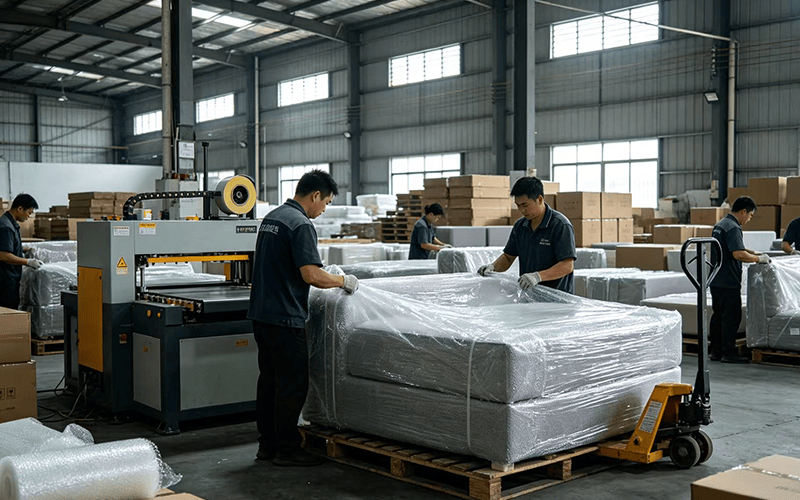
If you operate an online store (such as Amazon), a brand online shop, a warehouse-based sales
platform, or act as a brand distributor or supermarket purchaser, pure processing factories will be
your optimal partner. At this time, you have already understood the preferred furniture styles and
materials in the target market, no longer need market testing, and only need stable, standardized
mass production. What you pursue is on-time delivery, guaranteed product quality and favorable
source prices, without requiring extra services such as diverse style selection and low MOQ support.
In this scenario, cooperating with pure processing factories is far more efficient than choosing
middlemen, supply chain providers or trading companies.
After clarifying your sourcing goals and business needs, partner selection becomes much simpler. We
never need to choose a factory with overly large scale, luxurious showrooms and numerous employees
blindly. Instead, we should select factories that can match our sales goals and provide targeted
services. If you only need pure processing services, you only need to inspect the factory's
production scale, professional equipment and workforce quantity to ensure its production capacity.
If you need diversified product styles, and considerate supporting services including quotations,
order progress tracking, project bidding and style selection, you should turn to service-oriented
factories or suppliers.
In short, successful furniture sourcing in Foshan is not about choosing the "largest" factory, but
about choosing the "most suitable" partner. Clarify your business needs, define your sourcing
demands, and match the right cooperative object, so as to achieve efficient, cost-effective and
stable furniture procurement, and create long-term and healthy cooperation for your furniture
business.