

In today's sluggish global economy and saturated furniture and building materials market, the entire industry has fallen into a vicious cycle of brutal involution and low-price competition, creating an increasingly difficult environment for both practitioners and consumers.
Against this backdrop, consumer willingness to spend continues to decline. Except for a small number of developing economies with rigid demand for furniture and building materials, many developed countries and regions that experienced real estate booms have seen market demand decline continuously.
The widespread transparency of online and offline information channels, combined with extremely serious product homogenization, has fundamentally changed the original industry profit logic.
Consumers can now obtain product information through many different channels, making it increasingly difficult for merchants to maintain reasonable profit margins. Factories, meanwhile, are eager to secure orders and maintain production volume. As a result, some businesses choose the quickest but most damaging strategy: aggressive price wars and extremely thin margins supported by very high sales volume.
When the market competes only on price, everyone eventually pays the hidden cost.
This is one of the reasons low-price e-commerce platforms have risen rapidly in recent years. Their model often prioritizes ultra-low prices and rapid market penetration over product quality, personalized design and long-term user experience.
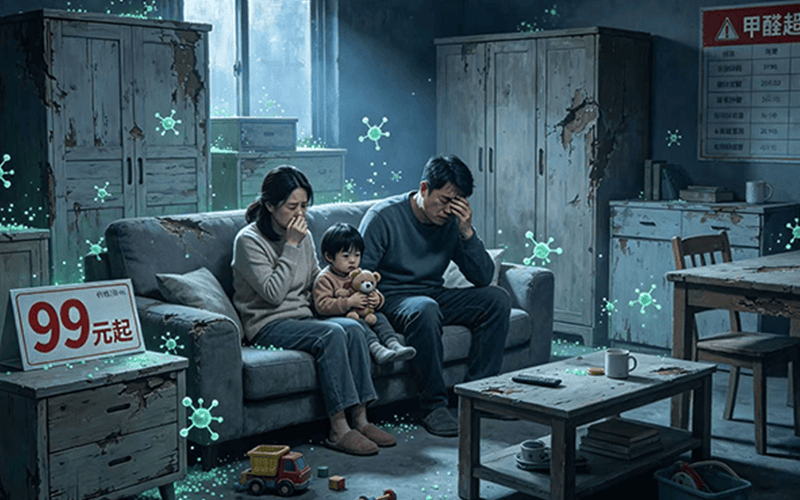
For consumers, the immediate purchase price may appear attractive. However, the real cost of inexpensive furniture can include poor materials, structural problems, reduced durability, environmental concerns and lower long-term living comfort.
The furniture industry therefore faces an important question: how can manufacturers and distributors escape the cycle of involution and compete through genuine value rather than continuously lowering prices?
When Low Prices Become the Core of the Furniture Market
This situation is highly consistent with the consumption logic of cheap fast food and junk food.
Most consumers clearly understand that unhealthy food can create health risks, but many still choose it because of its low price and immediate convenience. Only after experiencing health problems or serious consequences do some people reconsider their choices.
A similar pattern can appear in the furniture industry. Consumers may understand that extremely cheap furniture can involve compromises, but the low initial price and immediate usability can still dominate the purchasing decision.
The hidden risks can include poor-quality materials, excessive formaldehyde or other harmful substances, structural safety problems, reduced durability, long-term aesthetic fatigue and lower living comfort.
Many consumers adopt the mentality that they will simply replace inexpensive furniture after a few years, so there is no reason to invest in higher-quality products. However, this approach can overlook the cumulative economic, environmental and lifestyle costs of repeated replacement.
As consumers gradually become more aware of these issues, demand can shift toward furniture that combines quality, aesthetics, personalization, healthier materials and genuine long-term value.
Once this consumer awakening becomes widespread, the competitive structure of the furniture and building materials industry could change significantly.
The Hidden Cost of Low-Cost Furniture Production
From the buyer's perspective, the surge of low-cost furniture can appear to come simply from the mass-production strategies adopted by major sellers. When one large supplier successfully uses this model, competitors often follow.
However, the underlying reality can be considerably more complicated.
In a sluggish economy where jobs are scarce, pressure on labor costs can increase. Some companies may attempt to reduce wages, increase workloads or accept poorer working conditions in order to maintain extremely low selling prices.
At the same time, some manufacturers may turn toward lower-grade raw materials or reduce production standards in order to protect their margins.
The problem is therefore not simply that a product is inexpensive. The important question is how the manufacturer achieved that price.
If the reduction comes from better production efficiency, improved material utilization, automation, optimized logistics or stronger purchasing power, lower prices can represent genuine industrial progress.
But if the reduction comes from inferior materials, excessive labor pressure, reduced quality control or compromised safety standards, the apparent saving simply transfers the cost elsewhere.
Ultimately, these hidden costs can appear as environmental concerns, labor problems, product safety risks, poor durability and increased replacement requirements.
How Furniture Distributors Can Escape the Price War
So, for furniture and building-material practitioners, especially offline distributors and upstream factories, what is the core way to break this dilemma?
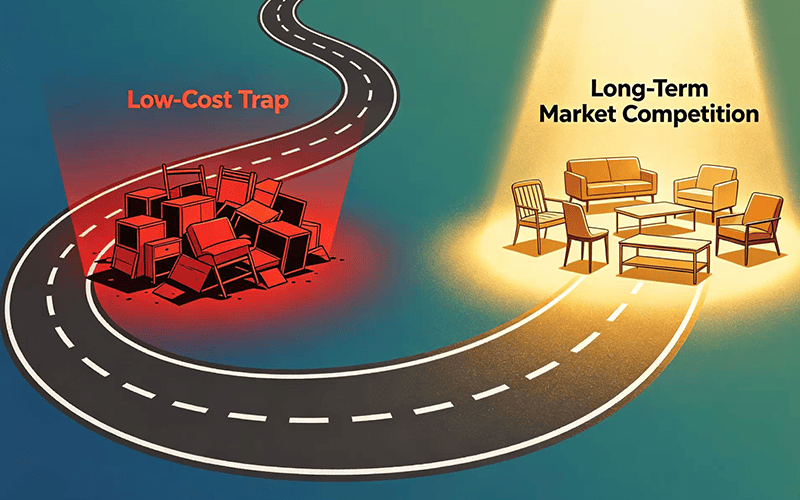
For furniture distributors and industry practitioners, the first priority should be to escape the homogenized low-price competition cycle and stop blindly following online price-war strategies.
Instead, businesses should focus on improving comprehensive market competitiveness.
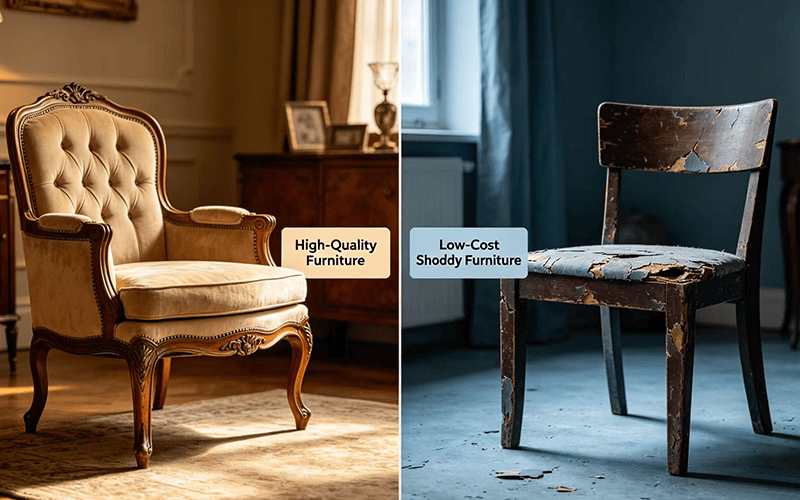
Product quality should become a fundamental differentiator. Healthy and properly specified materials, reliable construction and consistent production standards can create value that cannot be measured simply by comparing the lowest quotation.
After-sales service is equally important. A supplier or distributor that takes responsibility after the sale can create much stronger customer relationships than a company focused only on completing the initial transaction.
Personalized design solutions and user experience can also provide meaningful differentiation. When products become increasingly homogeneous, businesses need to give customers reasons to choose them beyond price.
This means developing differentiated brand advantages and targeting rational, quality-oriented consumer groups that have already awakened — or are beginning to awaken — to the limitations of purely low-cost products.
The objective should be long-term value operation rather than short-term profit extraction.
How Furniture Factories Can Compete Without Sacrificing Quality
For furniture manufacturing factories, the most critical issue is to rethink the profit model.
Factories need to move away from the single logic of “winning by volume” and instead explore how to reduce production costs reasonably and efficiently.
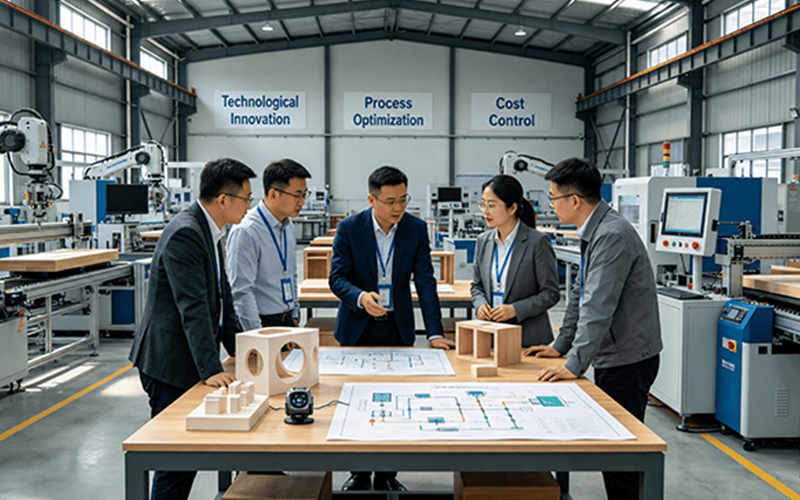
Cost reduction should come from better processes rather than from sacrificing product quality, cutting corners on materials or compromising consumer rights.
Manufacturers can optimize production processes, improve material utilization efficiency, reduce unnecessary production losses and strengthen production planning.
They can also develop market-validated products that combine practical functionality, attractive design and competitive manufacturing costs.
Product research and development and quality control should become central parts of the long-term strategy rather than costs that are eliminated whenever margins become tight.
The stronger development direction is therefore “high quality, high efficiency, high value” rather than relying on extreme price competition or short-term sales volume.
Consumers do not want to be treated simply as sources of short-term revenue. They increasingly expect products that protect their health, comfort, safety and quality of life.
As consumer expectations evolve, factories that can combine manufacturing efficiency with reliable quality and meaningful product value will be better positioned to survive the next stage of global competition.
How to Escape Homogeneous Price Competition
Competing successfully does not necessarily mean offering the lowest possible price. Focus on the factors that create measurable long-term value.
- Move away from competing only on the lowest selling price.
- Develop clear product differentiation instead of selling interchangeable products.
- Prioritize consistent product quality and reliable materials.
- Evaluate healthier and safer material options where appropriate.
- Improve after-sales service and customer support.
- Offer personalized design and project solutions.
- Build a recognizable and differentiated brand position.
- Target customers who value quality, durability and long-term value.
- Use online channels to communicate product value rather than only price.
- Build repeat business through customer trust and long-term service.
How to Reduce Costs Without Destroying Product Value
Sustainable cost reduction comes from improving the manufacturing system, not simply cutting the product specification.
- Optimize production processes and factory workflows.
- Improve raw-material utilization efficiency.
- Reduce unnecessary production waste and losses.
- Improve production planning and capacity utilization.
- Invest in practical product research and development.
- Strengthen quality-control procedures.
- Standardize production processes where appropriate.
- Use scale and purchasing efficiency to reduce genuine costs.
- Develop products based on verified market demand.
- Protect product quality while continuously improving manufacturing efficiency.
The future of furniture competition will not be decided by who can offer the lowest price, but by who can create the greatest long-term value.
The furniture and building materials industry is entering a period in which traditional low-price competition is becoming increasingly difficult to sustain.
When markets become saturated, information becomes transparent and products become homogeneous, businesses can easily fall into a cycle of continuous price reductions. One company lowers its price, competitors follow, and eventually the entire market operates with increasingly limited margins.
But low prices alone cannot create a sustainable industry.
Manufacturers need sufficient economic space to maintain production standards, invest in equipment, develop products, control quality and build professional teams. Distributors need enough margin to provide customer service, maintain inventory, develop their brands and support customers after the sale.
Consumers, meanwhile, ultimately decide which business models survive through their purchasing choices. As consumers become more aware of the hidden costs of poor-quality furniture, demand can gradually move toward products that offer better materials, better design, greater durability, healthier environments and stronger overall value.
This does not mean that furniture should become unnecessarily expensive. The goal should be better value rather than simply higher prices.
For factories, this means reducing costs through efficiency, innovation, process optimization and better material utilization rather than through uncontrolled quality reductions.
For distributors, it means moving beyond homogeneous products and building competitiveness through quality, service, design, differentiation and customer experience.
For the industry as a whole, it means gradually moving away from vicious involution and toward sustainable value competition.
Ultimately, only by returning to the essence of the product, focusing on long-term value and abandoning destructive low-price competition can furniture manufacturers and distributors achieve sustainable development and truly stand out in the global market.
In the furniture industry, involution describes a situation where companies compete intensely within an increasingly saturated market, often by lowering prices, increasing sales pressure and offering increasingly similar products without creating proportional additional value.
Online price transparency, product homogenization, weak consumer demand and intense competition for orders have made price one of the easiest factors for businesses to compare. This can encourage factories, distributors and retailers to continuously reduce prices in order to maintain market share.
No. A low price can result from genuine manufacturing efficiency, economies of scale, better purchasing power, automation or optimized production. The important question is whether the price reduction comes from efficiency or from compromising materials, production standards, quality control or safety.
Distributors can compete through product differentiation, better quality, healthier materials, personalized design solutions, after-sales service, customer experience and stronger branding. The objective is to give customers meaningful reasons to choose a product beyond its lowest price.
Factories can reduce costs through process optimization, better material utilization, reduced production waste, improved planning, automation, purchasing efficiency, product standardization and stronger production management rather than simply reducing material quality or labor costs.
Price will remain important, particularly when household budgets are under pressure. However, as consumers become more aware of durability, materials, safety, environmental concerns and long-term ownership costs, some market segments are likely to place greater value on quality and overall product value.
Looking for a Furniture Manufacturing Partner Focused on Long-Term Value?
Lohabour works with international buyers, wholesalers, hospitality projects, commercial developments and OEM programs. Our manufacturing capabilities cover upholstered furniture, wood furniture and metal furniture, with a focus on consistent production, quality control, efficient manufacturing and long-term cooperation.
Read About Our Manufacturing