
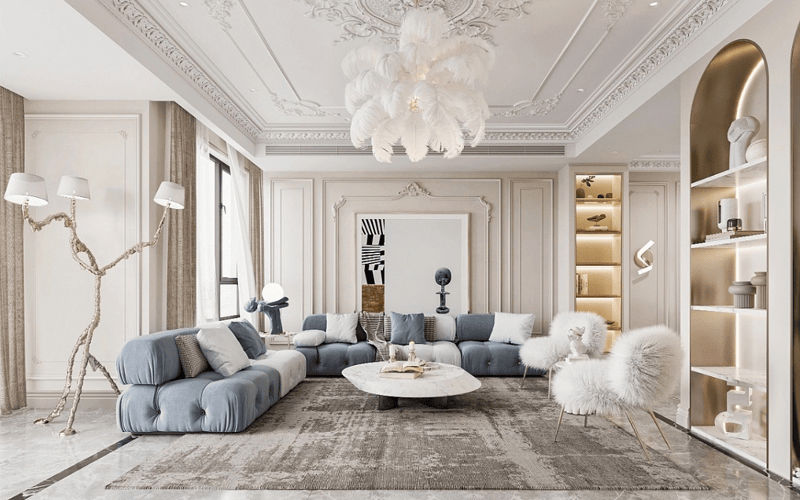
With the continuous advancement of technology, the global furniture industry is undergoing a profound transformation.
From product design and manufacturing to sales and after-sales services, furniture companies are increasingly integrating modern technologies into almost every stage of the business process.
At the same time, consumers are becoming more interested in personalized products, environmentally responsible materials, connected homes and experiences adapted to their individual lifestyles.
Artificial intelligence is emerging as one of the technologies with the greatest potential to accelerate these changes.
The future of furniture will not only be about what a product looks like, but how intelligently it can respond to the people using it.
AI can help manufacturers understand market demand, optimize product development, improve production efficiency, reduce waste and provide more personalized customer experiences.
Combined with smart-home technologies, automation, VR and AR, artificial intelligence could gradually transform furniture from static objects into integrated components of intelligent living environments.
The Major Development Trends Shaping the Furniture Industry
The furniture industry is moving toward greater personalization, sustainability and technological integration.
One of the most important trends is the growing demand for personalized and customized furniture.
Modern consumers increasingly want furniture adapted to their specific living spaces rather than standardized products. They may want to select different dimensions, colors, materials, finishes, functions and layouts according to their individual requirements.
Advances in manufacturing technology are making this type of customization increasingly practical. Digital production systems and flexible manufacturing processes allow factories to produce more variations without relying entirely on traditional mass-production models.
Environmental protection is another major direction.
Consumers and regulators are placing greater attention on material sourcing, emissions, recycling and manufacturing waste. Furniture companies are therefore increasingly exploring recycled wood, biodegradable materials, environmentally responsible production methods and lower-toxicity finishes.
At the same time, furniture is becoming increasingly connected to the smart-home ecosystem.
In the future, furniture may not simply provide a physical function. It may communicate with other devices, respond to user preferences and become part of a connected living environment.
The Development of Smart Homes
Smart homes are becoming an increasingly important component of the future furniture industry.
A smart home connects different devices and systems through digital networks to improve comfort, convenience, energy management and security.
Automation and remote control are already changing how people interact with their homes. Users can control lighting, temperature, security systems and other devices remotely or allow automated systems to respond to changing conditions.
For example, smart lighting can adjust according to activity or time of day, while connected climate-control systems can adapt to room temperature and user preferences.
Voice control is another important development. Voice assistants have demonstrated that users can interact with home systems without physically operating every individual device.
As artificial intelligence becomes more capable, smart homes can move beyond simple commands toward systems that learn from user behavior and preferences.
A future smart-home environment could automatically adjust different elements of the living space according to the habits of its occupants.
Integration and connectivity will also become increasingly important. Rather than having isolated smart devices controlled through different applications, future homes are likely to move toward more unified systems where furniture, appliances, lighting, climate control and security can communicate with one another.

How AI Is Changing Furniture Design and Innovation
Artificial intelligence can process enormous quantities of information and identify patterns that would be difficult to analyze manually.
For furniture companies, this creates new possibilities for understanding consumer preferences and predicting market trends.
AI systems can analyze information related to consumer behavior, product performance, search trends and market demand to help designers identify emerging opportunities.
Instead of relying entirely on intuition, designers can use data-driven insights to understand which dimensions, materials, colors, shapes and functions may appeal to specific customer groups.
AI can also support the design process itself. Digital tools can generate multiple design variations, simulate furniture in virtual environments and help designers evaluate aesthetics, proportions and functionality before physical prototypes are manufactured.
This does not mean that AI replaces designers.
Human creativity, cultural understanding, engineering knowledge and practical manufacturing experience remain essential. AI is better understood as a tool that can accelerate exploration and allow designers to evaluate more possibilities in less time.
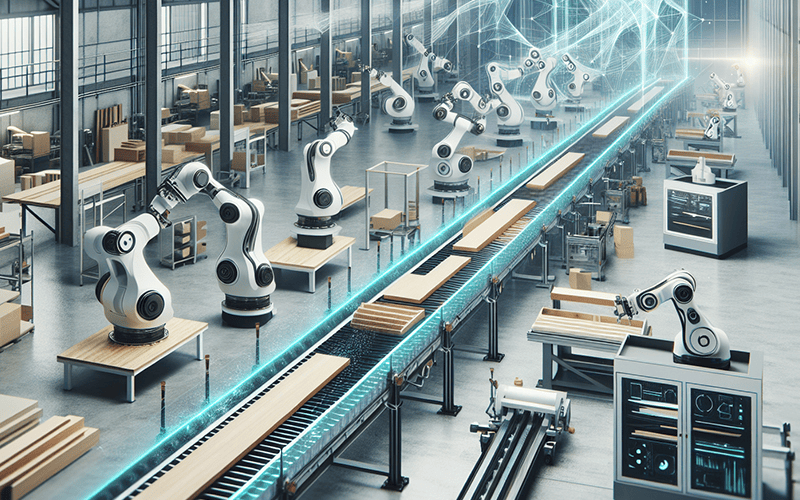
AI Can Make Furniture Manufacturing More Efficient
One of the most significant opportunities for AI is smart manufacturing.
Furniture production involves many individual processes, including material preparation, cutting, machining, assembly, finishing, inspection and packaging.
AI-assisted systems can help manufacturers automate repetitive operations, monitor production conditions and identify potential quality problems earlier.
Computer vision systems, for example, can inspect materials and finished products for certain visible defects. Production data can also be analyzed to identify recurring problems and determine where manufacturing processes can be improved.
AI can contribute to production planning by analyzing orders, available capacity, material requirements and production schedules.
Better planning can reduce unnecessary downtime, production bottlenecks and material waste.
This is particularly important for customized furniture, where manufacturers need to manage greater product variation while maintaining acceptable production efficiency.
Smart manufacturing can therefore improve not only productivity but also resource utilization and sustainability.
From Standard Furniture to Personalized Living Environments
AI also creates opportunities to make furniture more responsive to individual users.
Traditional furniture provides a predefined function. A sofa is a sofa, a bed is a bed and a chair provides a fixed sitting position.
Smart furniture can potentially respond to the behavior and preferences of the person using it.
For example, future smart mattresses could analyze sleeping patterns and adjust firmness or support according to user preferences. Smart seating systems could potentially adjust position or angle according to posture and usage patterns.
The same concept can extend beyond individual products.
Furniture could become part of a larger intelligent environment in which lighting, temperature, furniture settings and other home systems interact with one another.
The objective is not technology for its own sake. The real value comes from using technology to make living environments more comfortable, convenient and adapted to individual needs.
AI Can Also Transform Furniture After-Sales Service
The impact of AI does not stop when a furniture product leaves the factory.
After-sales service is an important part of the customer experience, particularly for furniture products that may remain in use for many years.
AI-powered customer-service systems can provide immediate assistance at any time, helping customers identify common problems, understand product instructions and determine whether professional support is required.
AI can also analyze product usage and service information to identify potential maintenance requirements.
In connected furniture, future systems could potentially detect abnormal conditions and notify users before a component fails completely.
Predictive maintenance could reduce unexpected failures, extend product lifetimes and improve customer satisfaction.
For manufacturers, the information generated through after-sales interactions can also become valuable product-development data. Repeated customer complaints may reveal weaknesses in a design, material or production process that should be addressed in future versions.
How Furniture Companies Can Leverage AI
To benefit from artificial intelligence, furniture companies should not simply add AI tools without changing their underlying processes.
The first step is to build a stronger data-driven approach to design and production.
Companies can analyze customer behavior, market trends, competitor products and sales performance to better understand demand and improve product-development decisions.
AI can then support production planning, quality control, inventory management and resource optimization.
Another opportunity is smart furniture development.
Furniture manufacturers can cooperate with smart-home technology providers to integrate connectivity and intelligent functions into sofas, beds, chairs, desks and other furniture categories where technology genuinely improves the user experience.
However, smart features should provide real value. Adding technology simply for marketing purposes can increase product complexity and cost without creating meaningful benefits for customers.
AI, VR and AR Can Change How Customers Buy Furniture
Personalized customization is another area where artificial intelligence can have a major impact.
Customers often struggle to imagine how a particular sofa, table, cabinet or bed will look inside their own home.
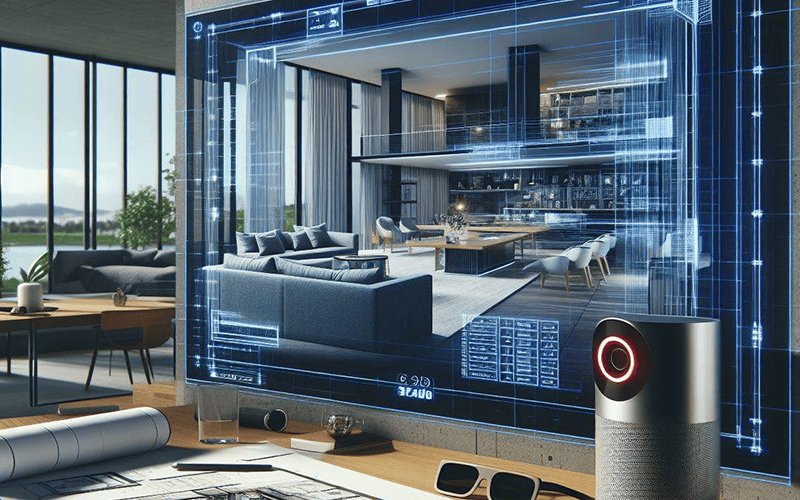
Virtual reality and augmented reality can reduce this uncertainty by allowing customers to visualize furniture in a digital representation of their living environment before purchasing.
AI can take this concept further by recommending products, dimensions, materials and configurations according to the customer’s space, preferences and previous choices.
Instead of browsing hundreds of standardized products, customers could receive a smaller selection specifically adapted to their requirements.
This can improve the purchasing experience while also reducing the risk of choosing furniture that does not fit the available space or desired aesthetic.
For manufacturers and retailers, digital visualization can also reduce the need for physical samples and make customized products easier to present to international customers.
AI Will Make Furniture Marketing More Personalized
AI can also change how furniture companies communicate with customers.
Instead of presenting the same products and advertisements to everyone, companies can use customer data to identify different purchasing patterns and create more targeted recommendations.
For example, a customer interested in minimalist apartment furniture may receive a completely different product selection from a customer looking for luxury hotel furniture or large residential projects.
AI-powered customer-service systems can also provide continuous online support and help international buyers obtain product information more quickly.
For global furniture companies, this can be particularly valuable because customers may be located in different time zones and require information outside normal working hours.
The combination of personalized recommendations, intelligent customer service and data-driven marketing can help furniture businesses improve customer satisfaction and build stronger long-term relationships.
Where AI Can Create Real Business Value
Furniture manufacturers do not need to transform everything at once. The strongest opportunities are areas where AI can solve measurable business problems.
- Use data to understand consumer preferences and market trends.
- Apply AI to support product research and design development.
- Use digital simulation to test furniture concepts before physical prototyping.
- Improve production planning and scheduling.
- Use computer vision and automated systems for selected quality-control processes.
- Optimize material utilization and reduce production waste.
- Develop genuinely useful smart-furniture functions.
- Use AI to improve customer recommendations and product selection.
- Provide faster AI-assisted after-sales support.
- Analyze customer complaints to improve future product development.
Questions to Ask Before Adding Technology to Furniture
Smart features should solve real customer problems rather than simply make a product appear more technological.
- Does the technology provide a meaningful improvement in comfort or convenience?
- Will customers actually use the smart function?
- Is the technology reliable enough for long-term furniture use?
- Can the product be maintained and repaired efficiently?
- Does the technology increase production complexity unnecessarily?
- Can the feature integrate with existing smart-home systems?
- Does the additional cost create sufficient customer value?
- Can the product remain competitive if technology standards change?
The Furniture Industry Is Moving Toward Intelligent Customization
The strongest future furniture businesses will combine manufacturing expertise with digital intelligence rather than relying on technology alone.
- Combine human design expertise with AI-assisted analysis.
- Connect digital product development with flexible manufacturing.
- Use AI to improve rather than replace human decision-making.
- Integrate furniture with smart-home ecosystems where appropriate.
- Use VR and AR to improve furniture visualization.
- Develop products around real consumer needs.
- Maintain sustainability while introducing new technologies.
- Build long-term customer relationships through better service.
The future of furniture is not simply smarter products. It is the integration of intelligent design, flexible manufacturing, personalized experiences and connected living.
The integration of artificial intelligence with the furniture industry is opening a new stage of development for manufacturers, retailers and consumers.
Furniture is gradually moving beyond the traditional model of static products designed for mass production. Personalization, smart manufacturing, connected homes and intelligent customer services are creating new possibilities throughout the entire furniture value chain.
For manufacturers, AI can improve product research, design development, production planning, quality control and resource utilization. For retailers and brands, it can create more personalized marketing, product recommendations and customer support. For consumers, it can provide furniture that is better adapted to individual spaces, preferences and lifestyles.
However, the adoption of AI should not become a technology race in which companies add unnecessary features simply because they are available.
The most successful applications will be those that solve real problems: reducing production waste, improving consistency, helping customers choose the right product, simplifying customization, improving comfort or providing better after-sales service.
Human expertise will remain essential. Furniture design requires creativity, cultural understanding, material knowledge and practical manufacturing experience. AI should therefore be viewed as a powerful tool that expands human capabilities rather than simply replacing them.
The combination of artificial intelligence with VR, AR, smart-home technology, automation and flexible manufacturing could ultimately transform furniture from a static object into an intelligent component of the living environment.
As technology continues to develop, the furniture industry will increasingly compete not only on price and appearance, but also on intelligence, customization, sustainability, usability and the quality of the overall customer experience.
For furniture manufacturers willing to adapt, this transformation represents more than a technological challenge. It is an opportunity to rethink how products are designed, manufactured, sold and supported — and to build a new generation of furniture businesses around higher value rather than simple volume.
AI can influence furniture design, market analysis, production planning, quality control, customization, marketing and after-sales service. It can help companies analyze customer preferences, optimize manufacturing processes and create more personalized products and experiences.
AI is more likely to become a design-support tool than completely replace furniture designers. Human creativity, cultural understanding, engineering knowledge, material expertise and practical manufacturing experience remain essential to successful furniture development.
Smart furniture incorporates digital or connected technologies that can provide additional functionality, interact with other devices or adapt to user preferences. Examples could include connected beds, adjustable seating systems or furniture integrated into smart-home environments.
AI can support production planning, process optimization, quality inspection, defect detection, material utilization and resource management. These applications can help manufacturers reduce waste, improve efficiency and identify production problems earlier.
Yes. AI can analyze customer preferences and space requirements to recommend dimensions, materials, colors and configurations. Combined with digital manufacturing, VR and AR, it can make customized furniture easier to design, visualize and purchase.
VR and AR can allow customers to visualize furniture inside a representation of their own living environment before purchasing. This can help them evaluate dimensions, proportions, colors and overall appearance and reduce uncertainty when buying customized furniture.
AI-powered customer-service systems can provide rapid assistance, identify common problems and guide customers through troubleshooting. In connected furniture, future systems may also support predictive maintenance and notify users when servicing or component replacement is required.
Smart furniture is likely to grow where technology provides genuine improvements in comfort, convenience or functionality. However, adoption will depend on reliability, cost, interoperability and whether consumers see enough value in the additional technology.
Explore Our Furniture Manufacturing Capabilities
Lohabour combines furniture manufacturing expertise with customized production capabilities for international buyers, wholesalers, hospitality projects, residential developments and OEM programs.
Discover Our Products