
If you collect supplier catalogs and product information from Alibaba, furniture exhibitions or other offline sourcing channels, you will quickly notice a striking phenomenon: many Chinese furniture products look remarkably similar.
Whether you are comparing sofas, dining tables and chairs, coffee tables or TV cabinets, the same styles and product structures often appear across multiple manufacturers.
This creates a common question for overseas buyers: why do Chinese factories manufacture almost identical furniture while their quotations can vary significantly?
The answer requires looking beyond individual factories and understanding how the entire furniture supply chain operates.
China has developed powerful industrial clusters, highly specialized upstream suppliers and a flexible manufacturing ecosystem. These advantages allow factories to respond quickly to market demand and produce large volumes at competitive costs.
However, the same ecosystem also creates structural problems, including product homogenization, aggressive price competition, opaque production lead times and significant differences in quality and management between manufacturers.
China's furniture supply chain is powerful — but understanding how it really works is essential for sourcing successfully.
For overseas buyers, the objective should not be to view China simply as a source of cheap furniture. The real advantage comes from understanding the industrial system, identifying its bottlenecks and selecting manufacturers that can provide genuine differentiation and reliable long-term cooperation.
Why Generic Furniture Styles Dominate the Chinese Market
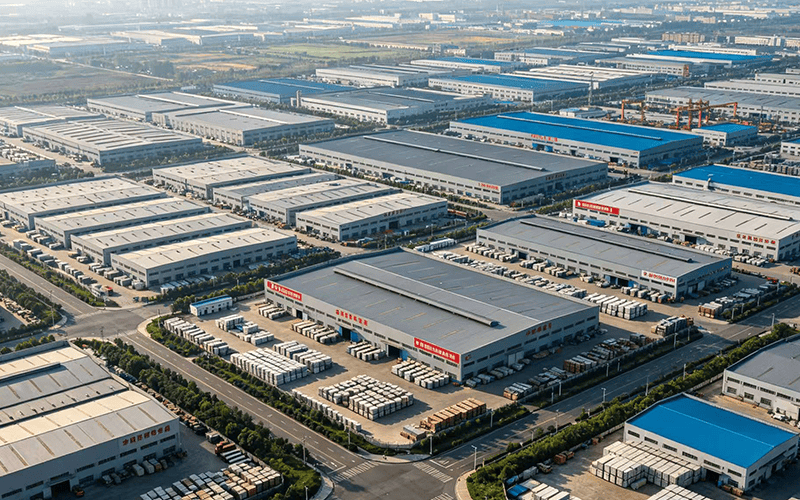
One of the most obvious characteristics of the Chinese furniture market is the high degree of product homogeneity.
When buyers compare catalogs from different factories, they may find dozens of suppliers offering almost identical products. The differences can sometimes appear to be limited to small details, finishes, colors or dimensions.
This phenomenon is closely connected to changes in the domestic furniture market.
When market demand weakens, launching completely original designs becomes more difficult to justify economically. A new product requires design development, prototyping, photography, tooling, material preparation, marketing and inventory investment.
If the market response is uncertain, the financial risk can be significant.
As a result, many factories prefer to reproduce furniture styles that have already demonstrated strong market demand. When a particular design becomes successful, other manufacturers quickly develop similar versions.
This creates a cycle in which successful products are copied, production capacity expands and the same styles become increasingly common across the market.
The result is a highly competitive environment where factories can produce efficiently but where genuine product differentiation becomes increasingly difficult.
Why Factories and Distributors Prefer Low-Risk Generic Models
The dominance of generic furniture styles is not caused by manufacturers alone. Distributors and wholesalers also play an important role.
For factories, producing an established design can reduce development risk and allow production to be organized around known materials, components and processes.
For wholesalers and distributors, buying an already popular product is easier to justify because similar products can be found from many suppliers.
This makes price comparison simple.
A distributor can request quotations from multiple factories and compare prices for products that appear almost identical. A completely new design, on the other hand, is more difficult to benchmark because there may be no direct competing quotation.
This creates a natural preference for familiar products and proven designs.
The result is a self-reinforcing system: distributors demand products they know will sell, factories produce products that distributors already want, and competitors copy products that have demonstrated market success.
Over time, this mechanism can flood the market with highly similar furniture.
For overseas buyers, this is one of the reasons why simply searching Alibaba for a product category often produces dozens of almost identical results.
How Domestic Furniture Trends Become Export Products
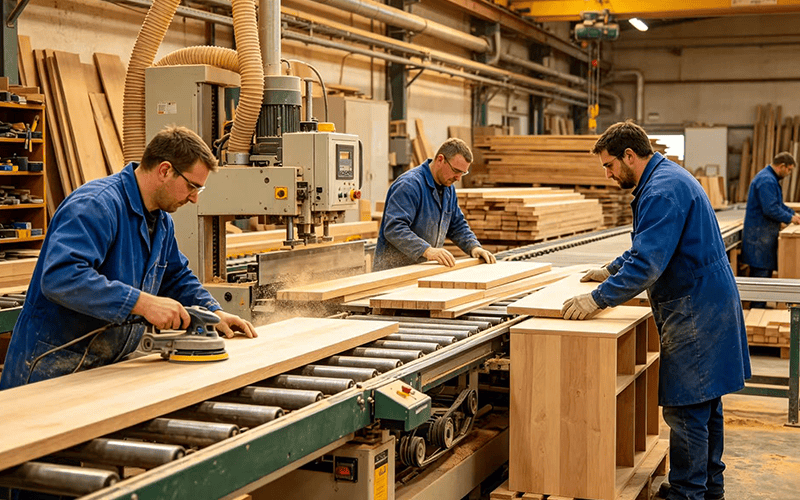
Domestic Chinese consumer trends can have a direct influence on the products eventually offered to international buyers.
Many furniture trends first become popular through Chinese social and e-commerce platforms. Once consumers begin purchasing a particular style in large numbers, manufacturers quickly react to the demand.
Chinese consumers often prefer relatively safe and proven furniture styles, particularly when furniture represents a significant household investment.
Rather than taking the risk of choosing an unusual design, consumers may prefer styles that are already widely accepted in the market.
Once a style becomes commercially successful, manufacturers across different industrial clusters can rapidly begin producing similar versions.
The same products can then enter export channels.
In some cases, exporters do little more than translate Chinese product information into English and offer the same generic designs to international customers.
The product may therefore be manufactured efficiently, but there may be little independent redesign specifically for the preferences, dimensions, lifestyles or market positioning of overseas consumers.
This creates an important problem for international distributors: a product that appears popular across Chinese supplier catalogs is not necessarily a product that has been validated in their own local market.
The Dilemma Facing Overseas Furniture Distributors
Overseas distributors can easily fall into the same pattern as Chinese manufacturers.
When they see dozens of Chinese suppliers offering the same furniture style, they may assume that the product must be popular because so many factories are manufacturing it.
However, the number of factories producing a product does not necessarily prove that the product is successful in a particular overseas market.
The opposite can sometimes be true: many factories may simply be following the same trend.
Local consumers can also reinforce this behavior. If most furniture stores offer similar styles, consumers may perceive those products as safer choices because they are already widely accepted.
This creates a feedback loop in which distributors, manufacturers and consumers all reinforce product similarity.
The situation becomes particularly challenging for Western markets where some customers actively seek personalization, distinctive design and customized furniture.
Even distributors who want to offer something different may struggle to find suitable suppliers when their sourcing process is limited to generic marketplace listings.
This is why overseas buyers need to look beyond standard catalog products and identify manufacturers with genuine design development and customization capabilities.
The Real Risks Behind Low-Cost Generic Furniture
In a highly competitive market, overseas buyers can easily find extremely low-priced furniture from Chinese suppliers.
At first glance, this may appear to create an obvious business opportunity.
However, a business model based entirely on the lowest possible purchasing price can be unstable.
A supplier may eventually increase its price, reduce production capacity, change its product strategy or leave the market entirely.
In more serious cases, a small manufacturer with weak financial management may shut down unexpectedly, leaving the buyer searching for a replacement supplier in the middle of an established product program.
There is also a quality risk.
When several factories compete primarily on price for an almost identical product, the temptation to reduce material specifications, simplify production processes or lower quality-control costs can increase.
The lowest quotation should therefore never be evaluated in isolation.
Buyers need to understand why a factory is cheaper and whether that advantage comes from genuine production efficiency or from compromises that may eventually create additional costs.
How Overseas Buyers Can Escape Product Homogeneity
If your imported furniture is exactly the same as your competitors' products, your ability to compete will eventually depend heavily on price, distribution reach and marketing.
Once competitors can purchase the same product from the same or similar Chinese factories, the competitive advantage becomes difficult to protect.
Product differentiation is therefore one of the most important ways to escape the cycle.
Instead of selecting suppliers solely because they already have a popular catalog, buyers should consider manufacturers with genuine design-development capabilities and customization services.
A capable factory should be able to understand a buyer's requirements, modify existing designs or develop new products according to specific dimensions, materials, finishes and functional requirements.
Customization can also allow overseas buyers to develop products specifically adapted to their own market rather than simply importing the same designs already available to every competitor.
This approach requires more communication and development work, but it can create a much stronger competitive position than simply searching for the lowest factory quotation.
For long-term businesses, the objective should be to build a product portfolio that competitors cannot reproduce simply by opening the same Alibaba search page.
China's Supply Chain Strengths Are Still Difficult to Replace
Despite these challenges, it would be a mistake to conclude that China's furniture supply chain has lost its competitive advantages.
China continues to offer one of the world's most complete manufacturing ecosystems for furniture and related products.
Industrial clusters bring together raw-material suppliers, hardware manufacturers, component producers, processing factories, finishing companies, packaging suppliers and logistics providers within relatively concentrated geographic areas.
This ecosystem allows manufacturers to respond quickly to changing customer requirements and production volumes.
For overseas buyers, this industrial density can be extremely valuable. A project requiring wood furniture, metal components, upholstery, hardware and specialized finishing may be supported by a network of specialized suppliers rather than a single factory having to perform every operation internally.
China also retains strong production responsiveness and a mature export infrastructure.
These advantages explain why China remains a major sourcing hub for global furniture buyers despite rising costs and increasing competition from other manufacturing countries.
The key is not to ignore the weaknesses, but to understand them and build a sourcing strategy around them.
The Real Bottlenecks Overseas Buyers Need to Understand
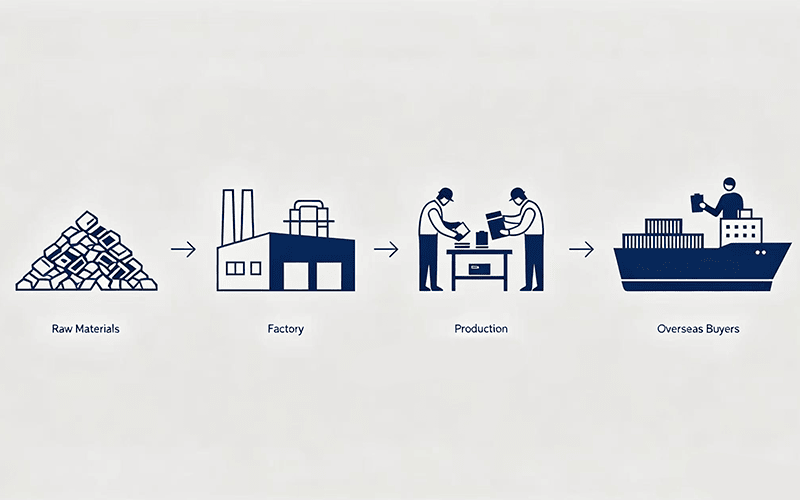
China's manufacturing strengths do not eliminate supply-chain risks.
Raw-material prices can fluctuate and affect quotations. Small and medium-sized factories can have very different levels of quality-control maturity. Hidden production or logistics costs can appear after an initial quotation.
Delivery lead times can also be less predictable than buyers expect, particularly when several outsourced suppliers are involved in production.
Compliance and environmental standards can vary significantly between manufacturers and regions. A factory that appears competitive from a catalog may therefore require much more verification before it can be considered a reliable long-term partner.
These factors directly affect the profitability of international orders.
A quality problem can create replacement costs and customer complaints. A delivery delay can affect an entire launch or project schedule. An unexpected cost increase can eliminate the margin that initially made an order appear attractive.
For this reason, professional sourcing requires more than checking a supplier quotation and factory capacity.
Buyers need to understand the underlying supply chain, identify potential bottlenecks before production and establish appropriate communication and quality-control mechanisms.
How to Evaluate a Chinese Furniture Supplier Beyond Price
A supplier quotation is only one part of the sourcing decision. Look at the complete manufacturing and supply-chain picture.
- Check whether the factory is producing its own designs or mainly copying market trends.
- Ask about customization and product-development capabilities.
- Verify the actual materials and construction specifications.
- Compare equivalent specifications rather than headline prices only.
- Understand which production processes are outsourced.
- Evaluate quality-control procedures and inspection systems.
- Check realistic production lead times before confirming an order.
- Understand packaging, logistics and additional production costs.
- Assess the supplier's ability to support repeat orders.
- Look for a long-term manufacturing partner rather than only the cheapest supplier.
How to Build a More Competitive Furniture Portfolio
The strongest defense against price competition is a product that cannot be compared directly with every competitor's catalog.
- Develop products specifically for your target market.
- Use customized dimensions where appropriate.
- Develop distinctive materials, finishes or combinations.
- Work with factories that can modify existing designs.
- Develop original products instead of relying entirely on generic catalogs.
- Protect consistent product specifications across repeat orders.
- Build a recognizable design language across your collection.
- Combine product differentiation with reliable after-sales service.
- Use market feedback to continuously improve your product portfolio.
China is not simply a low-cost sourcing market. Its real advantage lies in the depth of its industrial ecosystem — and buyers who understand that ecosystem can source far more strategically.
To understand the real state of China's furniture supply chain, overseas buyers need to look beyond the stereotype of China as simply a source of low-cost mass production.
China retains enormous industrial advantages: highly developed manufacturing clusters, efficient production responsiveness, specialized upstream and downstream suppliers and a mature export infrastructure.
These advantages are the reason China remains one of the most important sourcing hubs for global furniture buyers.
At the same time, genuine bottlenecks remain. Raw-material price volatility, inconsistent quality control among smaller factories, hidden costs, severe product homogenization, uncertain delivery lead times and uneven compliance standards can all affect an international buyer's profitability and project schedule.
These challenges should not be viewed simply as flaws in the Chinese manufacturing system. They are also part of the growing pains of a highly competitive and increasingly mature industry.
The biggest mistake an overseas buyer can make is to ignore these risks while focusing exclusively on the lowest quotation.
Smart global sourcing is not simply about checking prices and production capacity. It requires understanding how the supply chain works, identifying risks before production begins, selecting reliable manufacturers and establishing transparent communication and quality-control systems.
For buyers who want to build a long-term furniture business, product differentiation is equally important. Importing the same generic products available to every competitor makes it extremely difficult to build a sustainable competitive advantage.
Working with manufacturers that can provide customization, engineering support, product development and consistent production can allow buyers to create furniture collections specifically adapted to their own markets.
China's supply-chain strengths remain solid, but they now require more discerning judgment from international buyers.
The information gap between overseas buyers and Chinese manufacturers can hide important differences in quality, production capability, pricing structure and supply-chain reliability.
Only by understanding the complete picture can buyers avoid unnecessary risks, stabilize their procurement strategy and develop sustainable relationships with Chinese manufacturers.
This is the real truth of China's furniture supply chain — and understanding it is one of the most valuable advantages an overseas buyer can have.

Product homogeneity is driven by market demand, risk reduction and intense competition. Factories often reproduce designs that have already demonstrated market demand because developing completely new products involves greater financial and commercial risk.
No. China has many manufacturers with strong engineering, customization and product-development capabilities. However, generic products are particularly visible on large sourcing platforms because they are easier to manufacture, compare and sell at scale.
Price differences can come from materials, production processes, factory efficiency, order quantity, quality-control standards, finishing, packaging, labor costs, supplier margins and the amount of outsourced processing involved.
Yes. China continues to offer a highly developed furniture manufacturing ecosystem, including industrial clusters, specialized suppliers, flexible production and mature export logistics. Buyers need to manage supplier and quality risks carefully rather than assuming every factory offers the same capabilities.
Instead of relying only on generic marketplace catalogs, buyers should look for manufacturers with genuine design-development and customization capabilities. These suppliers can modify existing products or develop furniture according to specific dimensions, materials, finishes and market requirements.
Important risks include raw-material price changes, inconsistent quality control, outsourced production bottlenecks, hidden costs, uncertain delivery schedules, product homogenization and differences in compliance or environmental standards between factories.
No. The lowest quotation is only advantageous when the supplier can maintain the required quality, delivery schedule and service level. Buyers should understand why a supplier is cheaper and evaluate the total cost and long-term reliability of the relationship.
Looking for a Chinese Furniture Manufacturer That Can Customize for Your Market?
Lohabour works with international buyers, wholesalers, hospitality projects, commercial developments and OEM programs. Our manufacturing capabilities cover upholstered furniture, wood furniture and metal furniture, with a focus on customization, consistent production, quality control and long-term cooperation.
Read About Our Manufacturing