
When importing furniture or other products from China, many overseas buyers start with a simple assumption: buying directly from a factory must guarantee the lowest possible price, while trading companies and distributors must add unnecessary profit margins.
This belief is understandable, but it does not always reflect how Chinese supply chains actually work.
In many industries, the final price depends far more on order volume, production efficiency, purchasing power, product complexity and access to established supply chains than on whether the company selling to you owns the factory.
Factory direct does not automatically mean cheapest.
The same misunderstanding can also create unnecessary tension between buyers and suppliers. Overseas buyers worry that intermediaries are overcharging them, while Chinese suppliers are often trying to determine whether an inquiry comes from a genuine buyer or simply another company collecting quotations.
This article explains how Chinese suppliers evaluate buyers, why both sides can be suspicious of intermediaries, why large distributors can sometimes offer lower prices than direct factory purchases, and what buyers should actually look for when managing a China sourcing strategy.
How Chinese Suppliers Judge Genuine Buyers
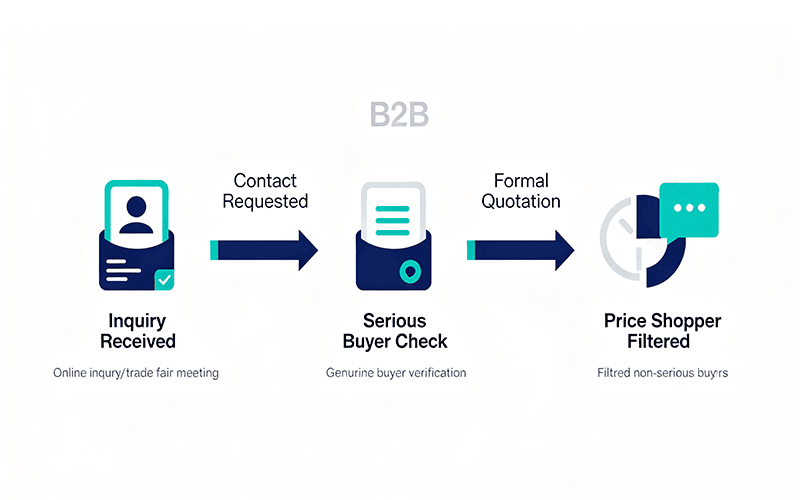
Before sending detailed quotations, many Chinese suppliers carry out a basic screening process. Online inquiries and trade-show meetings naturally involve a certain level of uncertainty because the supplier cannot immediately know whether an overseas buyer is a genuine purchaser, a competitor, a sourcing agent or simply someone collecting free quotations.
For this reason, suppliers often request basic contact information such as an email address, WhatsApp number or company information before providing detailed pricing.
Some buyers interpret this as an attempt to generate future marketing messages. In many cases, however, it is simply a way for the supplier to determine whether the inquiry represents a serious business opportunity.
A buyer who refuses to provide basic company or contact information may unintentionally signal that the inquiry is mainly for price comparison.
From the supplier's perspective, this simple screening process helps separate genuine purchasing projects from large numbers of low-quality price inquiries.
For serious buyers, providing clear company information, product specifications, expected quantities and project requirements can therefore make the sourcing process much more efficient.
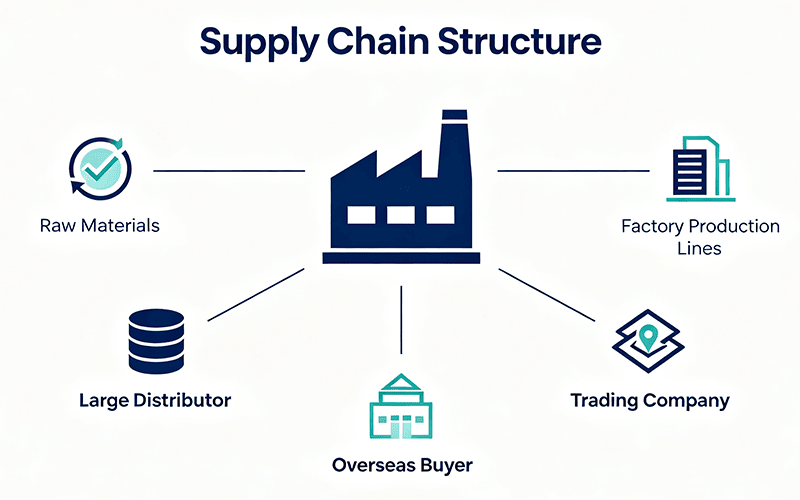
The Mutual Fear: Both Sides Suspect The Other Is a Middleman
Overseas buyers frequently ask an important question before cooperation: Are you a factory or a trading company?
What many importers overlook is that Chinese suppliers may be asking themselves a similar question about the buyer.
Manufacturers and distributors both want to understand who is ultimately purchasing their products and how the products will be sold. If an intermediary adds a very large markup, the final selling price may become uncompetitive, which can damage the supplier's relationship with the market.
This is why many Chinese manufacturers prefer to understand whether they are dealing directly with an end buyer, a distributor, a retailer, a project contractor or another intermediary.
At the same time, foreign buyers often worry that a trading company is simply purchasing from a factory and adding a large margin.
For standard products, this concern is often exaggerated. China's domestic market is highly competitive, and buyers can usually compare products and prices from many different suppliers.
A distributor that consistently adds excessive margins will eventually lose customers to competitors offering more competitive prices.
The existence of an intermediary therefore does not automatically mean that the final price is unreasonable. The important question is what value that intermediary provides within the supply chain.
Why Large Chinese Distributors Can Sometimes Beat Factory Pricing
One of the biggest misconceptions in China sourcing is the idea that factory-direct purchasing must always produce the lowest cost.
In reality, experienced buyers sometimes purchase through domestic Chinese distributors even when they have access to manufacturers.
There are two major reasons.
First, the buyer's minimum order quantity may simply be too small to take advantage of the factory's mass-production economics.
Second, large distributors can place much larger combined orders than an individual overseas buyer. Their purchasing volume gives them considerable negotiating power with manufacturers.
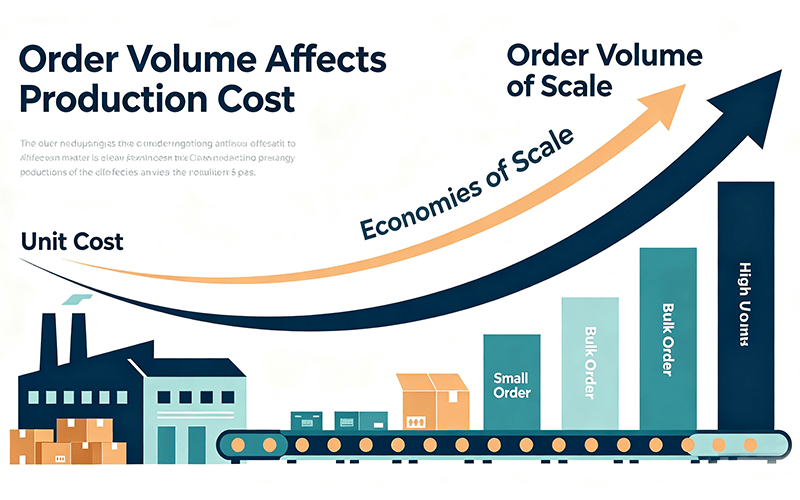
Factories have fixed operating expenses including rent, machinery, electricity, labour, maintenance and management. These costs exist regardless of whether the factory produces a large batch or a small batch.
When production volume is high, those fixed costs can be distributed across a much larger number of units. When an overseas buyer requests only a small quantity, the cost per unit naturally increases.
This means a distributor with large purchasing power may sometimes obtain a lower factory price than a small overseas buyer purchasing directly.
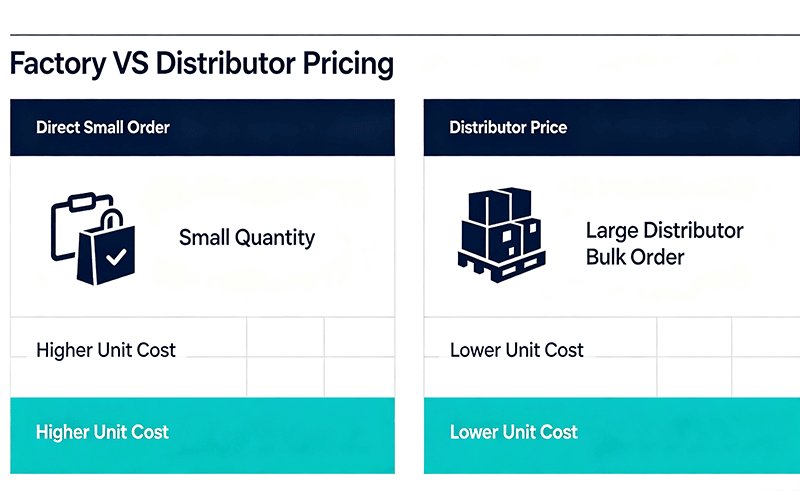
Limited Purchasing Volume
A buyer orders a relatively small quantity directly from a manufacturer. The factory still needs to allocate production setup time, labour, materials and management resources, so the unit cost may remain relatively high.
Bulk Purchasing Power
A distributor combines demand from many customers and places much larger orders with the factory. Higher volume can produce better factory pricing, which the distributor can then use to remain competitive in the market.
Do Chinese Trading Companies Add Huge Hidden Profits?
Buyers often worry that a non-manufacturer purchases products from a factory and then adds a very large hidden margin before selling them overseas.
This situation can exist, but it is not necessarily the normal situation for standard products.
Competition within China's domestic supply chain puts considerable pressure on distributors and trading companies to maintain competitive pricing.
For common products, buyers can usually find numerous competing suppliers. A company attempting to maintain an excessive margin will quickly face pressure from competitors offering similar products at lower prices.
The situation changes when the product is technically complex, difficult to source or connected to a highly specialized supply chain.
In these cases, the intermediary may provide genuine value through access to manufacturers, technical knowledge, quality-control resources, logistics coordination, product development and industry relationships.
A buyer may reasonably pay more for access to a supply chain that would otherwise take years to develop independently.
The key question is therefore not simply whether a supplier is a factory. The better question is: what resources, capabilities and value does this supplier provide?
The Optimal Supplier Management Strategy for China Sourcing
A successful China sourcing strategy should not begin with the question: Factory or trading company?
Instead, buyers should first understand the type of product they are purchasing and the economics of its supply chain.
For standard, generic products, buyers can often work with either manufacturers or large-volume distributors. The better choice depends on order quantity, pricing, lead time, quality requirements and logistics.
For technically demanding or difficult-to-source products, the supplier's industry knowledge and supply-chain access may be more important than factory ownership.
This is especially relevant for overseas buyers who do not have long-established relationships inside China's manufacturing ecosystem.
Finding the factory is theoretically possible. Finding the right factory, verifying its capabilities, negotiating suitable terms, coordinating production and maintaining stable quality over multiple orders is considerably more difficult.
For long-term procurement, the most important factors are therefore stable pricing, reliable lead times, consistent quality, communication and after-sales responsibility.
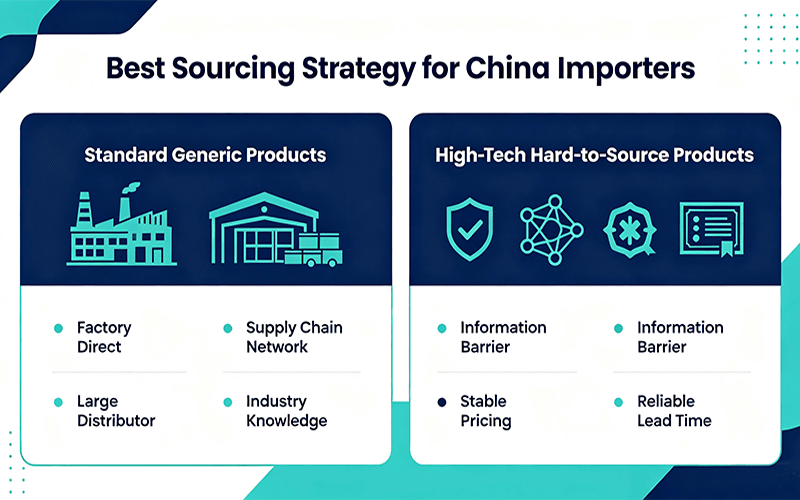
Standard & Generic Products
Compare manufacturers and large distributors. Focus on total landed cost, minimum order quantity, quality, lead time and consistency rather than automatically choosing the company that owns the factory.
Technical & Hard-To-Source Products
Evaluate the supplier's technical knowledge, production network, industry relationships, quality control and ability to access specialized supply chains. Factory ownership alone may not determine the best commercial option.
Ask These Questions Before Focusing On Factory Ownership
Instead of asking only whether a supplier is a manufacturer or trading company, evaluate the complete commercial relationship:
- What is the supplier's actual role in the supply chain?
- Who manufactures the product?
- What is the realistic minimum order quantity?
- Can the supplier provide competitive pricing at your actual order volume?
- How consistent is the product quality across repeated orders?
- What is the expected production lead time?
- Who is responsible for quality control and after-sales problems?
- Can the supplier maintain stable supply as your business grows?
Compare Total Value — Not Just The Factory Price
The lowest factory quotation does not automatically produce the lowest overall purchasing cost. When comparing suppliers, consider:
- Product unit price.
- Minimum order quantity.
- Tooling or development costs.
- Production lead time.
- Quality-control requirements.
- Packaging and logistics costs.
- Communication and project-management support.
- After-sales service and warranty responsibility.
The best supplier is not necessarily the company that owns the factory. It is the supplier that gives you the best combination of price, quality, reliability, supply-chain access and long-term support.
The factory-versus-trading-company debate has confused overseas buyers for decades. The reality is more complicated than simply assuming that factory ownership guarantees the lowest possible price.
Production economics depend heavily on order volume. A factory needs sufficient volume to spread its fixed operating costs efficiently, while a large distributor may already have the purchasing scale required to negotiate extremely competitive factory pricing.
For standard products, the right supplier may therefore be either a manufacturer or a distributor. For specialized products, the supplier's industry knowledge and access to difficult-to-reach supply chains may be even more important.
For furniture buyers in particular, the key questions should be practical: Can the supplier consistently deliver the required quality? Can they meet the required quantities? Are lead times reliable? Is communication clear? Who controls production and quality? And who will take responsibility if something goes wrong?
The goal of China sourcing is not to find the company with the smallest margin. It is to build a supply chain that remains competitive, reliable and scalable over time.
No. Factory-direct purchasing does not automatically guarantee the lowest price. Order volume, production efficiency, minimum order quantity and purchasing power can have a major impact on the final cost.
Not necessarily. Trading companies and distributors operate in a highly competitive market. Large distributors may sometimes obtain lower factory prices than small overseas buyers because they purchase in much larger volumes.
Large distributors can combine demand from multiple customers and place substantial orders with manufacturers. Their purchasing scale can give them stronger negotiating power and better production economics.
No. The best choice depends on the product, order quantity, required customization, quality requirements, lead time and the supplier's ability to manage the complete supply chain.
A trading company can be valuable when it provides access to reliable manufacturers, specialized products, quality control, logistics coordination, product development or industry relationships that would be difficult for an overseas buyer to establish independently.
Compare total cost, product quality, minimum order quantity, production lead time, communication, quality control, supply stability and after-sales responsibility rather than focusing only on whether the supplier owns a factory.
Looking For Reliable Furniture Manufacturing In China?
Lohabour provides commercial furniture solutions for hotels, restaurants, apartments, offices, developers and wholesale buyers. With dedicated production capabilities across sofas, beds, wood furniture and metal furniture, we can support both standard products and customized OEM projects.
Discover Our Products