
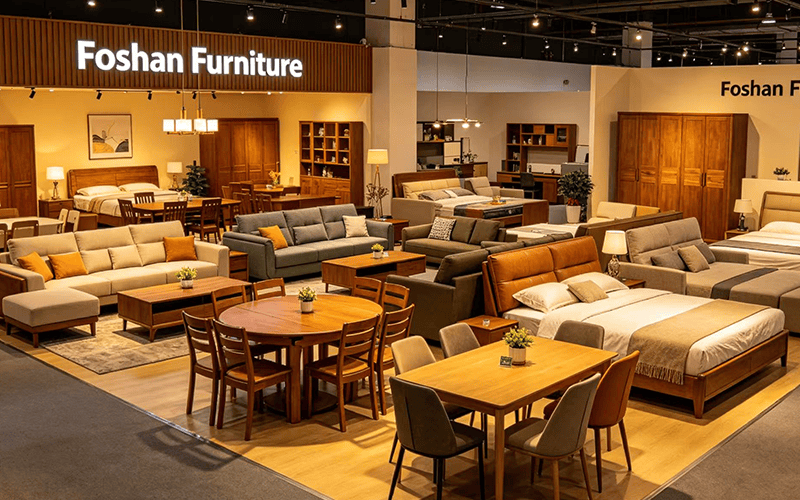
Foshan is one of China's most important furniture manufacturing and sourcing hubs. For overseas buyers, however, the huge number of showrooms, factories, wholesalers, distributors and trading companies can make the sourcing process surprisingly confusing.
A buyer walking through Foshan's furniture markets can find thousands of styles and dozens of potential suppliers within a very short distance. The difficulty is therefore not simply finding furniture. The real challenge is identifying the type of partner that actually matches your business model.
Before starting the sourcing process, every buyer should answer one fundamental question: are you coming to Foshan to find furniture styles, or are you coming to find a factory for long-term production?
These two objectives may appear similar, but they lead to completely different sourcing strategies.
The best furniture supplier is not necessarily the biggest factory. It is the partner that matches your business model.
Whether you operate an Amazon store, a branded online shop, a warehouse-based furniture business, a physical retail store, a distribution network or a project business serving hotels and apartments, your ideal sourcing partner will be different.
Understanding this distinction before visiting Foshan can save considerable time, reduce unnecessary supplier comparisons and help you build a more efficient long-term sourcing strategy.
Start With One Question: Are You Looking for Styles or a Factory?
The first step in Foshan furniture sourcing is to define what you actually need from the market.
Some buyers are primarily looking for furniture styles. They want to see different sofas, dining tables, chairs, beds, cabinets and other products before deciding what will work in their target market.
Other buyers already know exactly what products they need. They have established their preferred designs, dimensions, materials and specifications and are looking for a manufacturer capable of producing them consistently.
These are fundamentally different sourcing objectives.
If you are looking for styles, you need access to a broad product network and flexible suppliers capable of presenting many different product options.
If you are looking for a factory, you need to evaluate manufacturing capability, equipment, production processes, quality control, engineering support and production capacity.
Confusing these two objectives is one of the reasons new buyers spend too much time visiting unsuitable factories or assume that the largest showroom must also be the best manufacturing partner.
Why Foshan Offers So Many Different Furniture Sourcing Options
Foshan has developed a dense furniture ecosystem containing manufacturers, component suppliers, wholesalers, distributors, trading companies, showrooms and specialized processing factories.
This concentration creates a major advantage for international buyers because many parts of the furniture supply chain are located within the same broader industrial region.
A buyer can therefore find finished products, raw materials, hardware, upholstery, metal components, wood components and specialized processing capabilities within a highly interconnected manufacturing network.
However, this density can also create confusion.
A large showroom does not necessarily mean that the company manufactures everything displayed inside it. A supplier may combine products from several factories and provide buyers with a much wider catalog than any single manufacturer could produce itself.
This can actually be a major advantage for certain buyers.
The important question is not whether the supplier is a factory or a trading company in isolation. The important question is whether its business model matches your purchasing requirements.

What Is the Difference Between a Factory and a Supplier?
A professional furniture factory should be able to manufacture products according to confirmed specifications, materials and design requirements.
This can include furniture for apartments, hotels, residential developments, commercial projects and customized wholesale programs.
A supplier or trading company may operate differently. Instead of manufacturing every product internally, it may integrate products from multiple factories and present a broader selection to buyers.
For buyers who primarily want to select existing styles, this can be extremely useful.
A supply-chain provider may have access to hundreds or thousands of furniture models without requiring the buyer to communicate with every individual factory.
It is also a misconception that working with a supply-chain provider must automatically be more expensive than working directly with a factory.
A professional supplier can consolidate purchasing from multiple manufacturers and achieve significant order volumes. Its purchasing power can sometimes allow it to offer competitive pricing, particularly for small-batch buyers who cannot reach the minimum quantities required by individual factories.
The right comparison is therefore not simply factory versus middleman. Buyers should compare the complete service, price, MOQ, product range, customization capability, quality control and logistics support offered by each potential partner.

When Should You Work Directly With a Pure Processing Factory?
Some buyers specifically want to work directly with a manufacturing factory because they need customized production or the most direct control over the manufacturing process.
This is particularly relevant when a buyer has exclusive products, detailed technical drawings or strict specifications that must be reproduced accurately.
For example, if you have your own furniture design and require the manufacturer to reproduce specific dimensions, materials, construction details and finishes, direct communication with the factory can significantly reduce communication layers.
You may be able to communicate directly with the factory's designers, engineers and production managers, making it easier to clarify technical requirements and solve manufacturing issues.
However, pure processing factories also have limitations.
Many production-focused factories are designed around confirmed orders. Their priority is manufacturing rather than providing extensive pre-sales consulting.
They may not have the resources or motivation to spend months providing repeated quotations, product selection, market testing or project-bidding support when there is no confirmed production order.
If a buyer spends one or two months requesting quotations without eventually placing an order, a production-oriented factory may naturally reduce its follow-up effort.
This does not necessarily mean the factory is unreliable. It simply means its business model is focused on manufacturing rather than sourcing consultancy or market-development services.
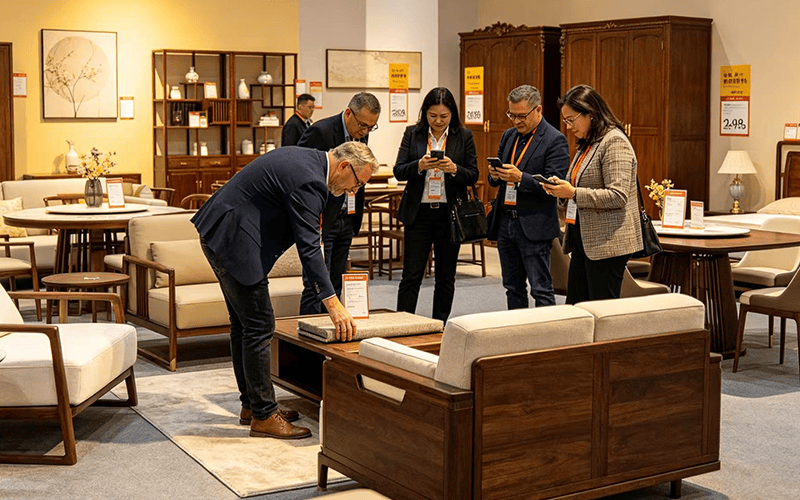
When a Supplier or Distributor May Be the Better Choice
Not every furniture business should immediately work directly with a large processing factory.
For physical retail stores and smaller furniture businesses, market testing is often more important than achieving the absolute lowest factory price.
A retailer may need to test several sofa styles, dining sets, beds, tables or decorative products before knowing which products will sell consistently.
In this situation, a supplier, distributor or smaller factory capable of flexible small-batch production can be more useful than a large factory that requires firm orders and higher minimum quantities.
A service-oriented supplier may provide access to a wider selection of styles while also supporting quotation requests, product selection, order coordination and shipment consolidation.
This allows the buyer to test market demand without immediately committing to large production quantities.
Once certain products demonstrate stable demand and order volumes increase, the sourcing strategy can change.
The buyer can then move higher-volume products toward specialized processing factories to reduce production costs, material costs and overall procurement expenses.
Which Foshan Supplier Is Right for Your Business?
Different furniture businesses require different supplier structures.
A physical furniture store may need many different styles, flexible quantities and frequent market testing.
An Amazon seller or branded online store may already understand its best-selling products and therefore require stable, standardized production rather than hundreds of new styles.
A warehouse-based furniture seller may require a mixture of standard products, competitive pricing and reliable replenishment.
A brand distributor may need consistent specifications and stable production across repeated orders.
Hotel and apartment projects may require customized dimensions, materials, finishes and coordinated delivery schedules across multiple product categories.
There is therefore no universally perfect Foshan supplier.
The right partner depends on whether your priority is product variety, customization, small MOQ, production capacity, price, project support, delivery reliability or long-term standardized production.
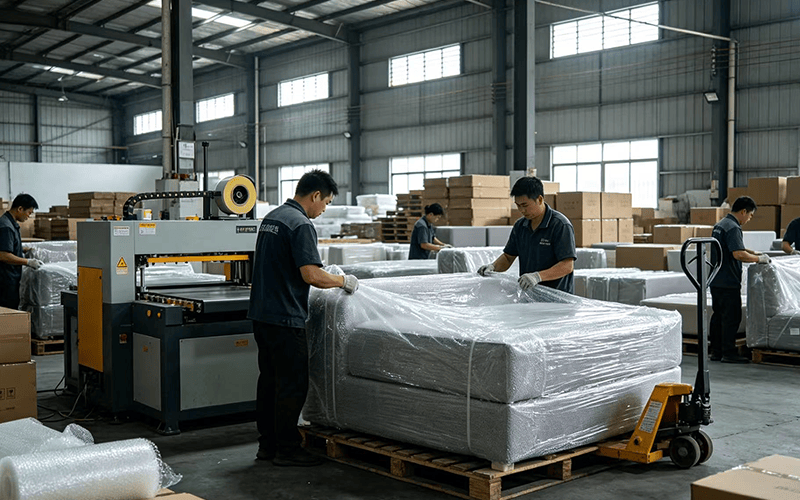
Do Not Automatically Choose the Biggest Factory
One of the biggest mistakes made by overseas buyers visiting Foshan is assuming that the largest factory must be the best supplier.
A large showroom, large workforce and impressive production facility can certainly indicate strong capabilities, but these factors do not automatically make the company the best fit for your business.
A buyer requiring pure processing services may need to focus primarily on production capacity, machinery, workforce, manufacturing processes and quality-control systems.
If the buyer requires diversified furniture styles, repeated quotations, project bidding, product development, market testing and order coordination, a service-oriented factory or supplier may be much more appropriate.
The best supplier is therefore the one whose capabilities match the buyer's actual requirements.
A smaller factory with strong technical expertise may be a better partner for a specialized product than a huge manufacturer that focuses on mass-market standardized production.
Likewise, a professional supplier with an integrated supply chain may be more useful to a small retailer than a large factory with high minimum order requirements.
Supplier selection should always start with your own business model rather than the supplier's appearance.
Define Your Furniture Sourcing Requirements
Before visiting showrooms and factories, define exactly what you want from your Chinese sourcing partner.
- Decide whether you are looking for furniture styles or a long-term manufacturing partner.
- Define your target furniture categories.
- Determine your expected order volume and frequency.
- Identify whether you need standard or customized products.
- Prepare drawings, dimensions and material specifications when customization is required.
- Determine your acceptable MOQ.
- Establish your target price range.
- Define your expected quality standard.
- Determine whether you need project bidding or quotation support.
- Plan your expected shipment and delivery requirements.
Choose the Right Type of Foshan Partner
Match the supplier structure to the way your business actually purchases furniture.
- Choose a broad supplier or distributor when you need many furniture styles.
- Consider small-batch suppliers when you are testing a new market.
- Choose a pure processing factory when you need stable, standardized mass production.
- Work directly with a factory when detailed customization and technical communication are essential.
- Consider service-oriented suppliers when you need quotations, sourcing and project support.
- Evaluate production capacity when delivery volume is critical.
- Evaluate customization capability when products are non-standard.
- Compare MOQ and pricing before choosing a partner.
- Check quality-control procedures before placing significant orders.
- Prioritize long-term compatibility rather than showroom size.
Change Your Supplier Strategy as Your Business Grows
Your ideal sourcing partner can change as your furniture business moves from market testing to stable mass production.
- Use flexible suppliers for initial market testing.
- Track which products generate consistent demand.
- Identify high-volume products separately from experimental products.
- Move stable high-volume products toward specialized manufacturers when appropriate.
- Negotiate better production pricing as order volumes increase.
- Standardize product specifications for repeat orders.
- Build long-term relationships with reliable factories.
Successful furniture sourcing in Foshan is not about finding the largest factory. It is about finding the partner whose capabilities match your business model.
Foshan offers overseas buyers one of the most complete furniture sourcing ecosystems in China, but this enormous choice can become a problem if buyers do not clearly define their sourcing objectives.
The first question should always be whether you are looking for furniture styles or a manufacturing partner.
If you are still testing your market and need a wide variety of products, flexible quantities and sourcing support, a professional supplier, distributor or service-oriented factory may be the most efficient solution.
If you already understand your market and require stable, standardized, high-volume production, a specialized processing factory can provide stronger production efficiency and more direct control over manufacturing.
For customized furniture, direct factory communication can also be valuable because designers and engineers can work directly with the buyer to reproduce drawings, dimensions, materials and technical details.
However, pure processing factories should not be expected to provide unlimited pre-sales support when there is no confirmed order. Their business model is primarily manufacturing.
This distinction is important because many sourcing problems are not caused by a supplier being “good” or “bad”. They happen because the buyer has selected a supplier whose business model does not match the buyer's requirements.
A small retailer, an Amazon seller, a furniture distributor and a hotel project may all source furniture from Foshan, but they should not necessarily work with the same type of partner.
As your business grows, your sourcing strategy can also evolve. Start with flexible suppliers when market testing is necessary, identify products with stable demand and then move suitable high-volume products toward specialized factories for more efficient long-term production.
Ultimately, successful furniture sourcing in Foshan is about matching needs with capabilities.
Do not choose a factory simply because it is large. Do not choose a supplier simply because it has the biggest showroom. Evaluate what your business actually needs and select the partner capable of delivering those requirements consistently.
When the buyer, supplier and manufacturing model are properly matched, furniture sourcing becomes more efficient, predictable and sustainable — creating the foundation for long-term cooperation in the international furniture market.
Foshan is one of China's major furniture manufacturing and sourcing hubs, with a dense ecosystem of furniture factories, component suppliers, wholesalers, distributors, trading companies and related industries. This gives overseas buyers access to a very broad range of products and manufacturing capabilities.
It depends on your business model. Direct factory sourcing is particularly useful for customized products, detailed technical requirements and stable high-volume production. Buyers who need many styles, small quantities or extensive sourcing support may find a professional supplier or distributor more suitable.
No. A professional supplier may aggregate large purchasing volumes across multiple factories and achieve competitive prices. For small-batch buyers, a supplier can sometimes offer better overall value because it provides access to multiple products without requiring the buyer to meet each factory's minimum order requirements.
A pure processing factory primarily focuses on manufacturing products according to confirmed specifications and orders. It may offer strong production capabilities and customization but may provide less pre-sales support, market testing or product-selection assistance than a service-oriented supplier.
A supplier or distributor can be a strong choice when you need many furniture styles, flexible quantities, small-batch purchasing, market testing, quotation support or access to products from multiple factories.
Once an Amazon seller has identified stable best-selling products, a factory capable of standardized and repeat production can be highly suitable. During the earlier market-testing stage, however, a flexible supplier may provide more product-selection options.
Hotel and apartment projects often require customized dimensions, materials, finishes, coordinated product categories and project-specific delivery schedules. A factory or service-oriented manufacturer with strong project support and customization capability can therefore be more appropriate than a supplier focused only on standard catalog products.
Not necessarily. Factory size should be evaluated alongside production capability, quality control, customization, MOQ, communication, delivery performance and the type of service your business requires. The best supplier is the one that matches your specific purchasing model.
Discover Our Furniture Manufacturing Capabilities
Lohabour works with international buyers, wholesalers, hospitality projects, residential developments, commercial projects and OEM programs. Explore our furniture products and discover how our manufacturing capabilities can support your sourcing requirements in China.
Discover Our Products