
Hotel managers are constantly looking for ways to make guests feel comfortable and encourage them to return. Creating a welcoming room environment is an important part of that experience.
The furniture inside a hotel room contributes significantly to how guests perceive the space. Although the TV stand may not be the most important piece of furniture in the room, it can influence both the appearance and functionality of the interior.
A well-designed hotel TV stand can provide a practical location for the television while also offering storage, decorative space and a visual connection between the different elements of the room.
For hotel projects, the selection should therefore go beyond appearance. Dimensions, viewing height, materials, structure, storage requirements, durability and the overall design language of the hotel all need to be considered together.
A hotel TV stand should do more than hold a television. It should contribute to comfort, functionality and the overall experience of the guest room.
This guide explains the main factors to consider when selecting hotel furniture TV stands, from room dimensions and viewing height to materials, structures and modern design approaches.
How to Choose a Hotel TV Stand
The first step when selecting a hotel TV stand is to consider the actual room where the furniture will be installed.
The size of the TV stand should be proportional to the available wall and floor space. A cabinet that is too large can make a small guest room feel crowded, while a cabinet that is too small may look disconnected from the television and surrounding furniture.
For example, in a guest room of approximately 12 square meters with a TV wall measuring around 3 to 4 meters, a TV stand approximately 1.2 to 1.5 meters wide can provide a balanced proportion. The exact dimensions should always be adapted to the room layout, television size and furniture arrangement.
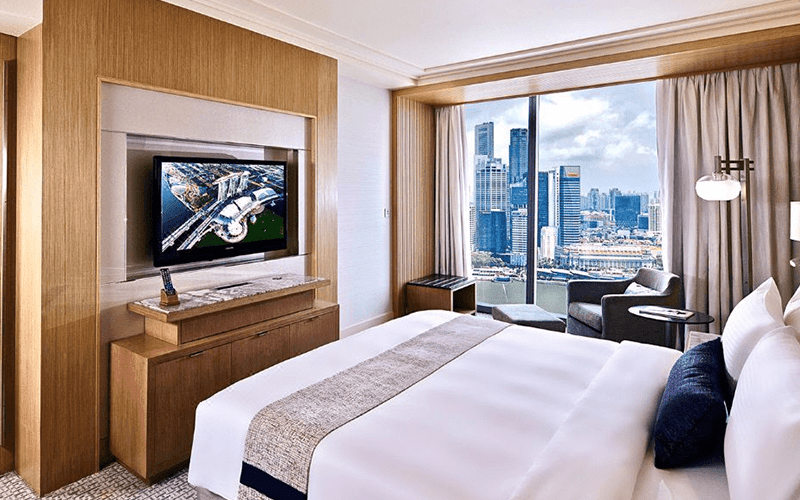
Height is another important consideration. Hotel guests often watch television from the bed, meaning the position of the screen should be comfortable from the normal viewing position. An incorrectly positioned television can create unnecessary neck or back discomfort.
The TV stand should therefore be designed together with the bed height, mattress height, television size and viewing distance rather than selected as an isolated piece of furniture.
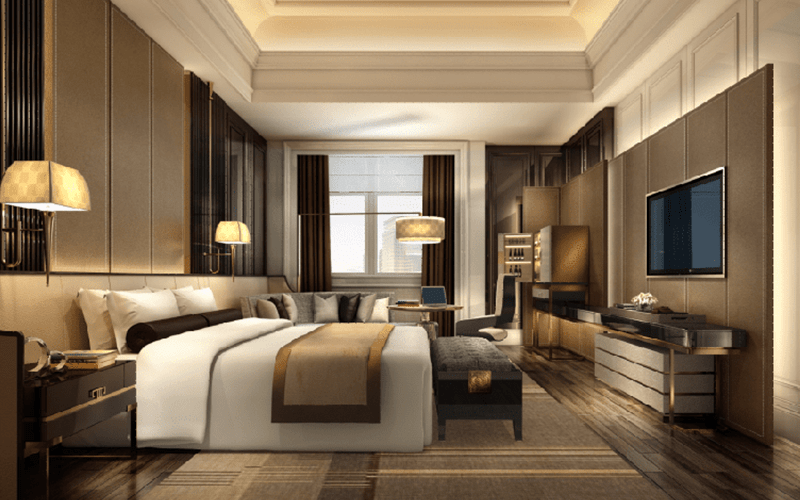
The overall decoration style should also influence the design. A modern hotel room may benefit from clean lines and minimalist proportions, while a more classical or luxury interior may require richer materials, decorative details or darker finishes.
Color should be coordinated with the rest of the room. Neutral wood tones, dark finishes, stone surfaces and carefully selected accent colors can all be used depending on the atmosphere the hotel wants to create.
Choosing the Right Material for Hotel TV Furniture
Material selection is particularly important in hotel furniture because the furniture must combine appearance with durability and ease of maintenance.
Hotel TV stands can be produced using a variety of materials and combinations, including wood, engineered wood panels, metal, glass, marble, ceramic and other decorative surfaces.
Wood and wood-based panels are widely used because they can provide a warm and comfortable appearance while offering considerable flexibility in color, finish and configuration.
Metal can be incorporated into the structure or decorative elements of the TV stand. Stainless steel and other metal components can provide strength and a contemporary appearance, making them suitable for modern hospitality interiors.
Glass can create a lighter visual effect and can help maintain a sense of openness in smaller rooms. However, the quality, thickness and safety characteristics of the glass must be carefully considered for hotel applications.
Stone, marble, ceramic and sintered surfaces can provide a more premium appearance and are often suitable for upscale hotel interiors. These materials can also be combined with wood or metal to create contrast between warm and hard surfaces.
For hospitality projects, the final material should be selected according to expected use, cleaning requirements, durability, maintenance, budget and the design concept of the hotel.
Hotel TV Stand Styles and Structures
Hotel TV stands can be classified according to both their materials and their structural configuration.
From a material perspective, common combinations include steel and wood structures, metal and glass, marble or stone surfaces, and engineered wood panel construction. Modern manufacturing also allows designers to combine several materials within a single piece of furniture.
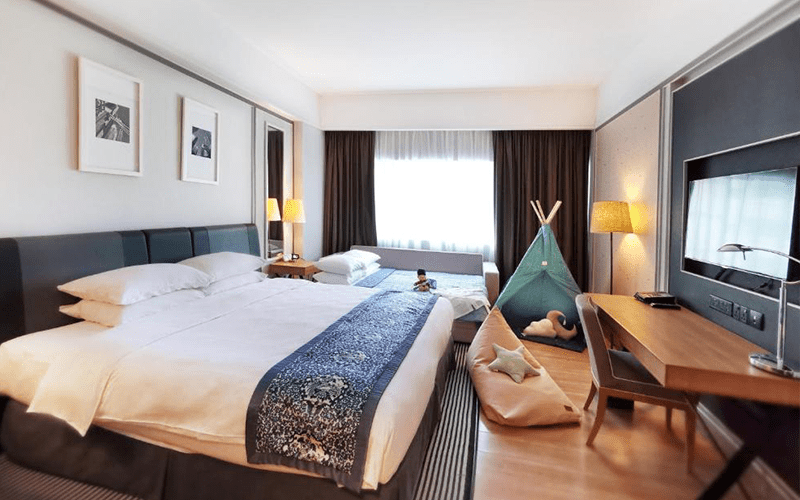
The structural design can generally be divided into floor cabinet types, partition types, suspended or hanging designs, and combined structures.
Floor cabinet TV stands are generally lower and provide enclosed storage. This configuration is practical when the hotel needs additional space for media equipment, accessories, minibar-related items or other guest-room supplies.
Partition-style TV stands use open sections to divide the furniture into several storage areas. This creates a lighter visual appearance while providing space for books, decorative objects or hotel accessories.
Suspended TV stands are attached to the wall and leave the floor underneath visually open. This can create a cleaner modern appearance and can also make floor cleaning easier in hospitality environments.
Combined TV furniture integrates several configurations into one unit. For example, a hotel TV wall may combine a lower cabinet, open shelving, decorative panels and concealed storage.
The best structure depends on the room layout, television size, storage requirements, maintenance strategy and design concept of the hotel.
Design the TV Stand Around the Guest Experience
A hotel TV stand should ultimately be designed around the needs of the guest rather than simply around the television itself.
Storage is one important consideration. Cabinets, drawers and open compartments can provide convenient places for remote controls, electronics, decorative accessories and other commonly used objects.
A well-organized TV wall can also help keep the guest room visually clean. Concealed storage is particularly useful when the hotel wants to maintain a minimalist appearance while still providing practical functionality.
Small decorative elements can be incorporated into the furniture to make the room feel warmer and more residential. Carefully selected accessories, baskets, lighting or decorative objects can help create a more welcoming atmosphere.
Cable management should also be considered during the design stage. Television power cables, network connections and other electronic wiring should be properly concealed or organized to avoid an untidy appearance.
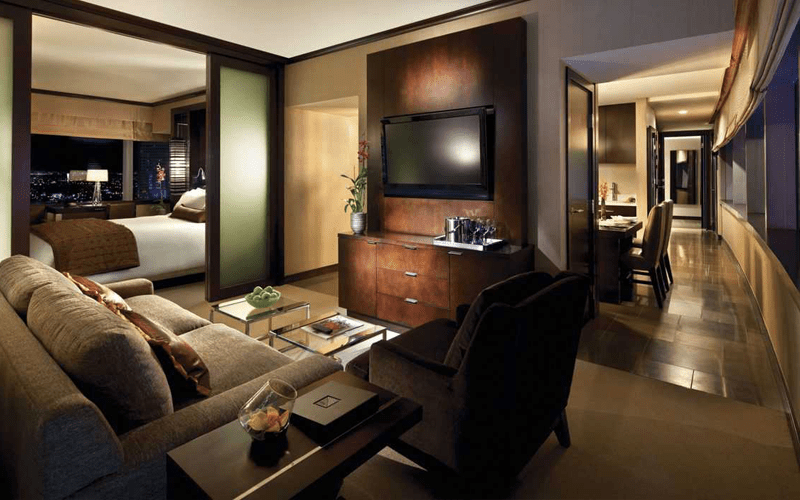
For hotel projects, the TV stand should also be coordinated with the bed, bedside tables, wardrobe, desk, luggage bench and other furniture so that the entire room follows a consistent design language.
The result should be a piece of furniture that looks integrated into the room rather than an independent cabinet added after the interior design has already been completed.
Check These Dimensions Before Ordering
Correct dimensions are essential when specifying hotel TV furniture for a hospitality project.
- Measure the available TV wall width.
- Confirm the television size and weight.
- Check the distance between the TV and the bed.
- Consider the mattress and bed height.
- Determine the appropriate TV viewing height.
- Allow sufficient clearance around the furniture.
- Check door, wardrobe and circulation clearances.
- Determine the required storage capacity.
- Plan cable and electrical connections.
- Confirm whether the furniture is floor-mounted or wall-mounted.
Evaluate Materials for Hospitality Use
Hotel furniture must withstand frequent use while maintaining its appearance over time.
- Select materials according to expected guest usage.
- Consider resistance to scratches and impact.
- Evaluate ease of cleaning and maintenance.
- Check the durability of surface finishes.
- Confirm the quality of wood or engineered panels.
- Evaluate metal components and structural strength.
- Use appropriate safety specifications for glass.
- Consider stone, ceramic or sintered surfaces for premium designs.
- Check color and finish consistency across production batches.
- Confirm that the selected materials meet project requirements.
Specify the Complete TV Furniture Solution
For large hotel projects, the TV stand should be considered as part of the complete guest-room furniture package.
- Define the overall hotel interior design concept.
- Coordinate the TV stand with the bed and bedside furniture.
- Match wood tones, colors and surface finishes.
- Plan concealed cable management.
- Determine open and closed storage requirements.
- Confirm television mounting requirements.
- Consider housekeeping and cleaning requirements.
- Evaluate durability for repeated hotel use.
- Prepare detailed production drawings before manufacturing.
- Request samples or prototypes before mass production.
The best hotel TV stand is not simply attractive. It should combine proportion, durability, storage, viewing comfort and design consistency with the rest of the guest room.
A TV Stand Is Part of the Complete Guest-Room Experience
Hotel TV stands may appear to be a relatively small part of a guest room, but their design can have a significant effect on both functionality and visual harmony.
The right solution should begin with the dimensions of the room, the size and viewing position of the television, and the overall furniture layout. From there, material, structure, storage and decorative details can be selected according to the hotel concept.
For modern hospitality projects, minimalist designs with clean lines and carefully selected materials can create an elegant and contemporary atmosphere. Wood, metal, glass, marble, ceramic and engineered panels can all be combined to achieve different visual and functional results.
Durability should remain a priority. Hotel furniture is used much more frequently than typical residential furniture, so surfaces, hardware, joints and structural components should be selected with long-term use in mind.
The TV stand should also be integrated with the rest of the guest-room furniture. When the television cabinet, bed, bedside tables, wardrobe, desk and other elements share a consistent design language, the room feels more complete and professionally designed.
Ultimately, a successful hotel TV stand balances appearance and practicality. It should provide a comfortable television viewing experience, useful storage and easy maintenance while contributing to the warm and welcoming atmosphere that encourages guests to enjoy their stay.
For hotel projects requiring customized TV furniture and complete guest-room furniture solutions, working directly with an experienced furniture manufacturer can help ensure consistent materials, dimensions, finishes and production quality across the project.
The size should be determined by the TV dimensions, available wall space, room size, viewing distance and surrounding furniture. The TV stand should remain proportional to the room and leave sufficient circulation space.
Common materials include solid wood, engineered wood panels, metal, glass, marble, ceramic and sintered stone. Materials can also be combined to achieve specific design, durability and budget requirements.
There is no single best configuration. Floor cabinets, open partitions, wall-mounted units and combined TV furniture can all work depending on the room layout, storage requirements, interior design and maintenance strategy.
Hotel guests commonly watch television from the bed, so the screen and TV stand should be positioned according to the bed height, television size and viewing angle. Correct positioning helps provide a more comfortable viewing experience.
Storage can be highly useful in hotel rooms. Drawers, cabinets and open compartments can accommodate electronics, accessories and decorative objects while helping maintain a clean and organized room environment.
Hotels should define dimensions, materials, finishes, hardware, storage, cable management, television mounting requirements, durability and cleaning requirements before production. Samples or prototypes can also help verify the design before mass manufacturing.
Yes. Customized TV furniture can be produced to match the materials, colors, dimensions and design language of beds, bedside tables, wardrobes, desks and other guest-room furniture. This is particularly useful for hotel projects requiring a consistent interior concept.
Looking for Customized Hotel Furniture in China?
Lohabour works with hotels, hospitality developers, interior designers and international buyers on customized furniture projects. Our manufacturing capabilities cover guest-room furniture, TV cabinets, wardrobes, bedside tables, desks and complete hotel furniture packages.
Discover Our Products