
With the continuous improvement of living standards, greater attention is being paid to the design and decoration of restaurants. A restaurant is no longer simply a place where people eat. The environment, atmosphere, furniture and spatial experience all influence how guests perceive the space.
Among these elements, restaurant furniture requires particular attention. Dining tables, dining chairs, booths, sofas and bar seating are in direct contact with guests, so their dimensions, comfort, materials, colors and proportions have a significant influence on the dining experience.
A restaurant can have beautiful decoration and expensive materials, but if the furniture is uncomfortable or the circulation space is poorly planned, the overall experience can still feel wrong.
The objective is therefore not simply to purchase attractive furniture. The furniture needs to match the restaurant concept, spatial layout, lighting, materials and expected customer experience.
In restaurant design, comfort is part of the decoration. The furniture, space and atmosphere must work together.
This guide explains the main types of restaurant furniture, several common restaurant decoration styles and some practical dimensions that should be considered when planning a restaurant, café, bistro or western-style dining space.
For restaurant owners and furniture buyers, understanding these relationships before purchasing furniture can help avoid one of the most common problems in hospitality projects: selecting furniture first and trying to make the space work around it afterwards.
What Are the Main Types of Restaurant Furniture?
Restaurant furniture refers to the furniture used in dining and social spaces, providing functions such as sitting, dining, leaning, storage and service.
The most common categories include dining tables, dining chairs, booths, sofas, bar stools, bistro tables, outdoor dining sets, turntables, dining cabinets, wine cabinets and baby chairs.
The correct combination depends on the restaurant concept, available space, service model and target customers.
A small café may primarily require compact bistro tables and lightweight chairs, while a large western restaurant may combine standard dining tables, booths, sofas, bar seating and private dining areas.
Furniture should therefore be considered as part of the restaurant layout rather than as independent products.
Four Common Restaurant Furniture Styles
Restaurant furniture should support the visual identity of the space. The same table and chair design can feel completely different depending on the surrounding materials, lighting and architectural style.
Four broad directions are particularly common: minimalist, retro industrial, rustic and individually creative designs.
These styles are not strict categories. In practice, many restaurants combine several influences to create a distinctive atmosphere.
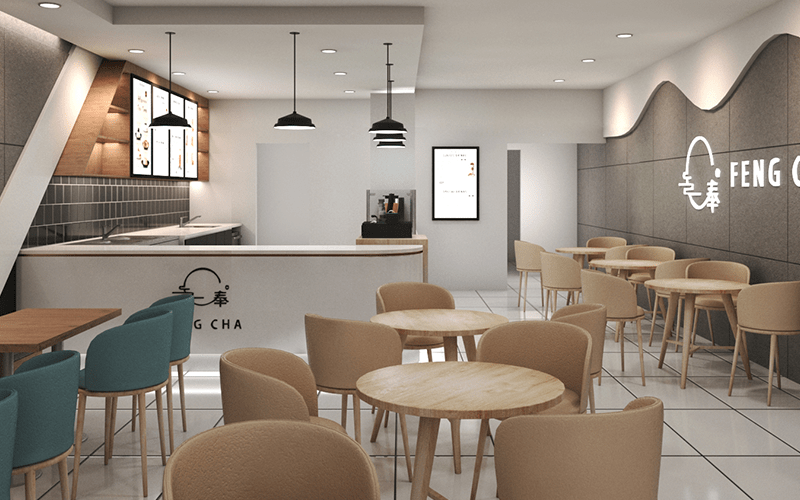
Minimalist Style
Modern minimalist decoration is widely used because it is flexible, clean and easy to adapt to different restaurant concepts. Simple structures, neutral materials and practical dimensions can create a contemporary environment without excessive decoration.
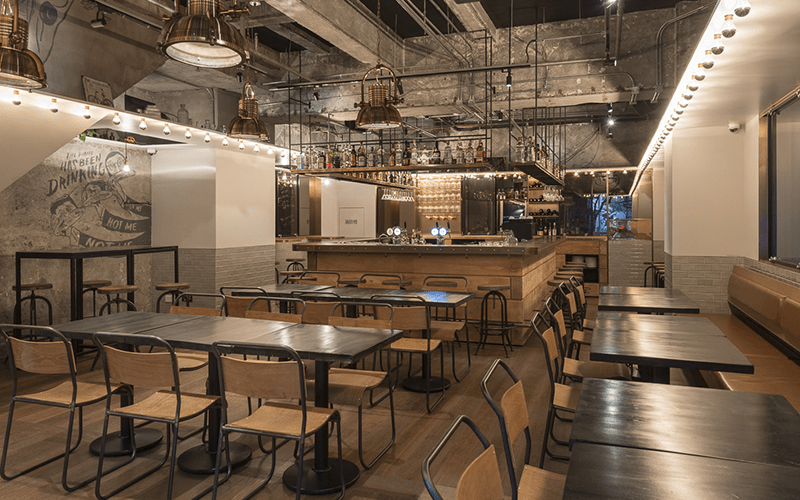
Retro Industrial
Industrial retro style combines exposed materials, metal structures, darker colors and vintage details. Restaurant furniture in this style can create a strong identity and is particularly suitable for cafés, bistros and casual dining concepts.
Rustic and Pastoral
Rustic styles can include European, Japanese, Chinese and Korean influences. Natural wood, woven materials, warm colors and softer forms are commonly used in cafés, dessert shops and restaurants seeking a relaxed atmosphere.
Individual Creativity
Creative restaurant furniture intentionally moves away from conventional dining tables and chairs. Unusual shapes, colors, materials or combinations can create a strong visual identity and attract customer attention.
How Should You Choose the Size of Restaurant Tables and Chairs?
Opening a restaurant involves many practical decisions. Should you use round tables or square tables? How large should the tables be? How much space should be left behind each chair? What height should the dining table and chairs have?
These dimensions should not be selected independently. They need to correspond to the restaurant type, expected number of customers, circulation requirements and available floor area.
For a simple restaurant with limited space, a compact square table for two people can be an efficient solution.
In a larger restaurant, a round dining table with a diameter of approximately 120 cm can accommodate a family or a larger dining group comfortably.
A rectangular dining table of approximately 140 × 70 cm can also provide a practical balance between seating capacity and floor efficiency.
These dimensions are useful reference points rather than universal rules. Final dimensions should always be adapted to the actual furniture design and project layout.
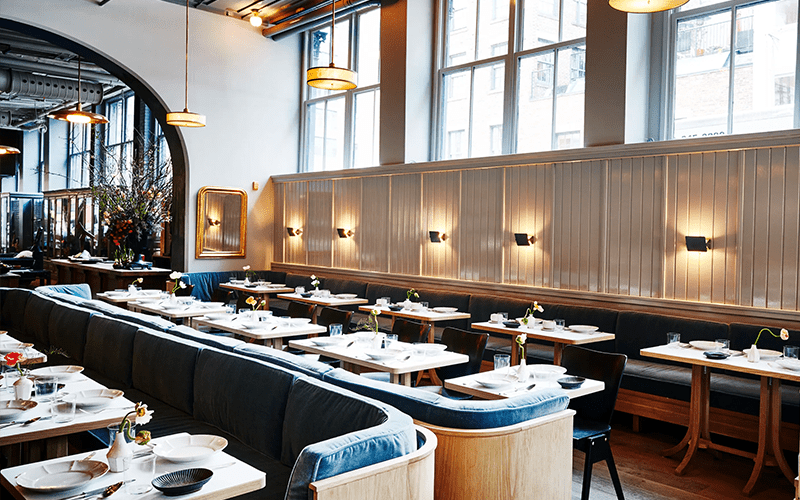
Why the Distance Between the Dining Table and Wall Matters
One of the most frequently overlooked dimensions in restaurant planning is the clearance around the dining table.
A dining table should not simply fit into the available floor area. Guests need enough space to pull their chairs out, sit down comfortably and allow other customers or staff to move through the restaurant.
As a practical reference, approximately 80 cm between the table and a wall can provide the minimum clearance required for pulling out a dining chair and using the table comfortably.
Reducing this distance too much can make a restaurant feel crowded even when the number of tables appears reasonable on the floor plan.
The same principle applies to circulation routes, service areas, booths and neighboring tables. Furniture density must always be balanced against customer comfort and staff movement.
A successful restaurant layout therefore considers not only how many seats can be installed, but also how easily people can move between them.
What Is the Appropriate Height for Restaurant Dining Tables and Chairs?
Standard dining tables are commonly around 75 cm high, although the final dimension varies according to the table design and intended use.
For a conventional dining table at this height, a dining chair seat height of approximately 45 cm is a useful reference point.
The relationship between table height and seat height is more important than focusing on either dimension individually.
If the chair is too high, guests can feel restricted underneath the table. If it is too low, the dining posture can become uncomfortable and the table may feel excessively high.
Restaurant furniture should therefore be tested as a complete set. Table height, seat height, seat depth, backrest angle and leg clearance all contribute to comfort.
For hospitality projects, it is particularly important to test physical samples before approving large production quantities.
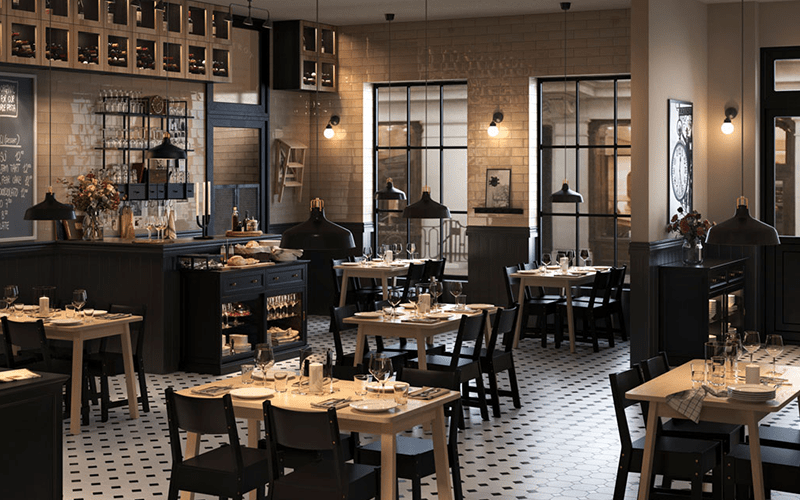
How Far Should a Restaurant Chandelier Be From the Tabletop?
Lighting plays an important role in restaurant atmosphere. It is not only a decorative element but also a functional component that affects how guests perceive food, furniture, materials and the overall space.
For a conventional dining chandelier or pendant light, approximately 70 cm between the light and the tabletop is often used as a practical reference.
This distance can provide relatively concentrated illumination over the table while maintaining a comfortable visual relationship between the guests and the light fixture.
However, restaurant lighting should not be designed around one dimension alone. Ceiling height, fixture size, light distribution, color temperature, table dimensions and surrounding ambient lighting all need to be considered.
Warm-colored lighting is frequently used in restaurants because it can contribute to a warmer and more intimate atmosphere.
The most effective lighting strategy usually combines general illumination with localized lighting that highlights dining tables, architectural details, plants, artwork and decorative elements.
What Defines a Western-Style Restaurant?
Western-style restaurants can include many different design directions, from French and Italian-inspired interiors to contemporary European restaurants that do not strictly represent one particular country.
Elegant colors, controlled lighting, refined table settings, decorative moldings, quality furniture and a calm atmosphere can all contribute to a western restaurant identity.
However, the objective should not be to reproduce a historical style mechanically. A successful restaurant design usually interprets the desired atmosphere through materials, furniture, lighting and spatial organization.
Depending on the concept, western restaurants can be divided into several broad styles, including antique, garden and modern interpretations.
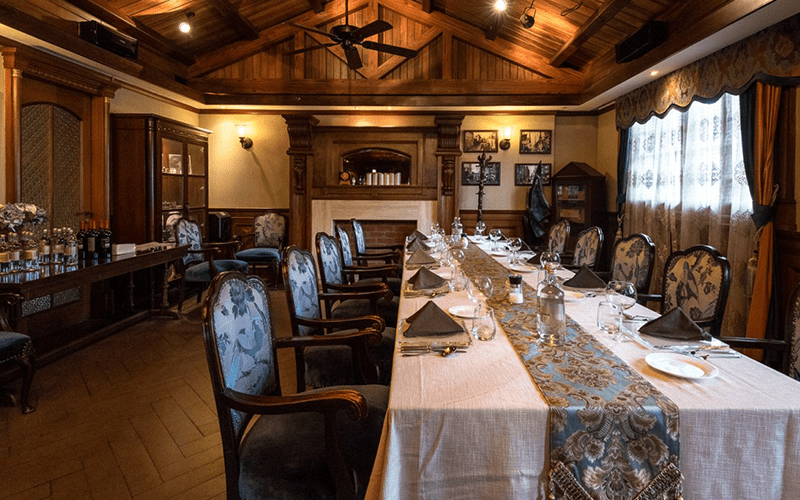
How to Match Furniture With an Antique Western Restaurant
An antique-style western restaurant should create a coherent historical and classical atmosphere through decoration, layout, furniture, colors and decorative details.
Traditional materials and furniture forms can help establish this identity without requiring every element to look antique.
Solid wood French-style dining tables and chairs can work well in the public dining area, while darker brown leather or matte leather sofas can be used in booths and private areas.
The materials and colors of the tables should be coordinated with the upholstery and sofa finishes so that the furniture appears to belong to the same visual system.
The objective is consistency. A classical dining table combined with highly contemporary seating can work in some intentional designs, but an accidental mixture of styles can make the restaurant feel visually fragmented.
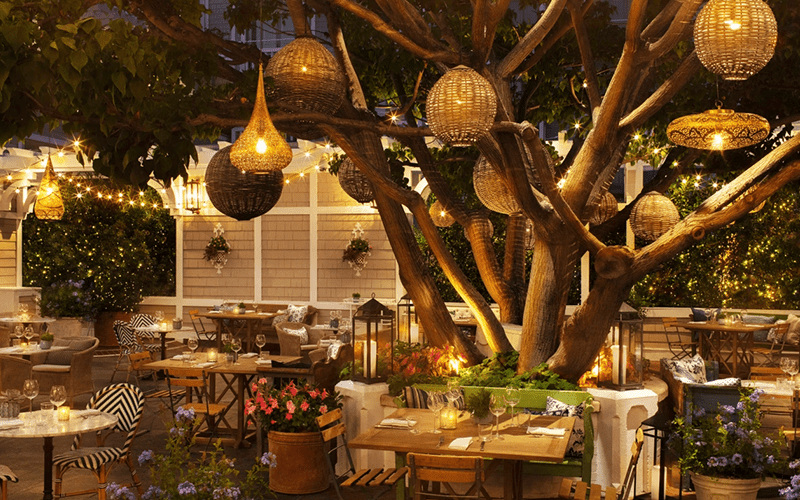
How to Select Furniture for a Garden-Style Restaurant
Garden-style restaurants emphasize a fresh and natural atmosphere. They may be surrounded by landscape, located in a scenic area, or organized around a courtyard combining indoor and outdoor dining spaces.
Because these restaurants often have a strong relationship with the surrounding landscape, furniture materials should support rather than compete with the environment.
Rattan, teak and rope-based outdoor furniture can work particularly well for garden restaurants and outdoor dining areas.
Natural wood tones and woven materials can reinforce the connection between the furniture and surrounding plants, stone, water and landscape elements.
For outdoor furniture, however, aesthetics should always be considered together with durability. Moisture, sunlight, temperature changes and maintenance requirements can significantly influence the appropriate material selection.
How to Design a Modern Western Restaurant
Modern western restaurants are generally more flexible because they can combine contemporary architecture with many different furniture materials and visual influences.
Some restaurants use sintered stone or marble tabletops with leather or velvet seating to create a refined and luxurious atmosphere.
Others use ash wood tables and chairs to create a simpler Nordic or Japanese-inspired environment.
The choice should be based on the desired customer experience rather than the perceived prestige of a particular material.
A sophisticated restaurant does not necessarily need expensive materials everywhere. Good proportions, coherent colors, appropriate lighting and comfortable furniture can often create a stronger result than excessive decoration.
The furniture should support the restaurant concept and make the customer experience feel intentional from the moment the guest enters the space.
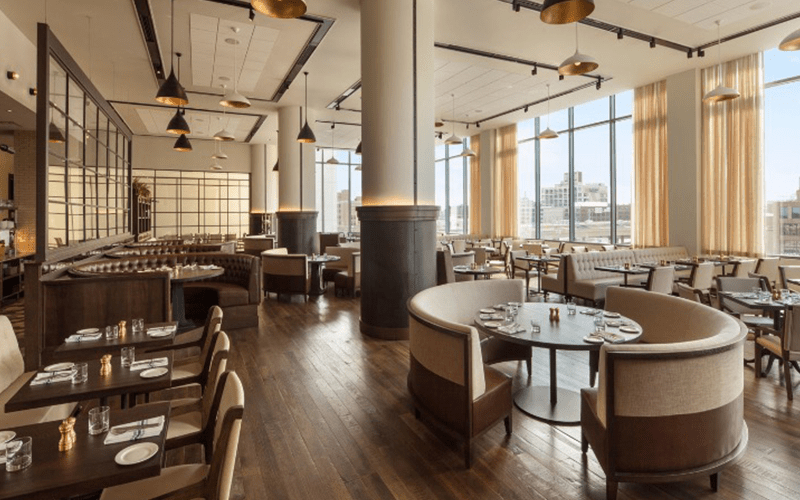
How Should the Space of a Western Restaurant Be Organized?
The floor plan of a western restaurant often follows a relatively organized structure, but the exact arrangement depends on the building and service model.
The bar can become one of the visual and functional focal points of the restaurant. In many concepts, it is also an important part of the customer experience rather than simply a service counter.
Large restaurants may use greenery as both decoration and spatial division. Plants can help separate tables and create a softer transition between different areas without constructing permanent walls.
Some western restaurants also include cold food or buffet tables positioned in accessible areas. Where such service elements are used, their location should allow customers to move easily without interfering with dining tables or staff circulation.
Depending on the restaurant concept, the main hall can include scattered tables, booth seating, a bar area and private rooms.
The important principle is that every area should have a clear purpose and that the circulation between dining, service and entrance areas should remain logical.
Why Lighting and Decoration Can Change the Entire Restaurant
In restaurant design, local lighting is often more important than simply increasing the overall brightness of the space.
The objective is to ensure sufficient illumination for normal activities while directing visual attention toward important areas such as dining tables, food presentation, artwork, plants and architectural details.
Pendant lights, shaded lamps and smaller localized light sources can create a more intimate atmosphere than a uniformly illuminated ceiling.
Light and shadow can also be used deliberately to create depth. Lighting hidden inside architectural cavities, below furniture or among plants can create visual layers and make a space feel more dynamic.
Western restaurants can also use artwork, decorative patterns and architectural details to strengthen the identity of the space.
Large restaurants with generous walls and high ceilings may support larger decorative elements, while smaller private rooms generally benefit from more restrained decoration.
The key is balance. Empty areas may need a focal point, but adding too many patterns and decorative objects can make a restaurant feel crowded.
Why Comfort Should Be More Important Than Decoration
When people imagine an attractive restaurant, they often think about elegant sofas, beautiful booths, sophisticated tableware, decorative lighting and artistic interiors.
These elements are important, but they should not become more important than the basic comfort of the customer.
A restaurant can look impressive in photographs and still be uncomfortable to use. Tables can be too close together, chairs can have inappropriate dimensions, lighting can be too strong or circulation can be restricted.
Comfort is particularly important because restaurant furniture is the part of the interior that the customer physically interacts with throughout the meal.
The chair needs to support the body properly. The table needs to provide sufficient legroom. The surrounding space needs to allow customers to move naturally.
This is why furniture selection should begin with the customer experience rather than simply the appearance of the product.
For hospitality projects, comfort is not an optional luxury. It is part of the functional design of the restaurant.
How to Create a Restaurant That Is Both Fashionable and Elegant
The strongest restaurant interiors usually do not rely on one expensive decorative element. Instead, they create harmony between color, material, furniture, lighting and architectural space.
For example, a restaurant with dark red flooring could combine cherry wood dining tables with coordinated seating materials to create a warm and sophisticated atmosphere.
Deep red tones can create a strong sense of cultural depth and elegance, particularly when combined with appropriate soft furnishings and controlled lighting.
Decorative chandeliers, plants, artwork and other visual elements can then be introduced selectively to reinforce the concept.
Another effective strategy is to establish a clear theme and repeat its visual language throughout the restaurant. The same material, color or geometric detail can appear in the tables, chairs, lighting, wall decoration and service areas.
Space transitions can also be used to create variety. Changes in materials, ceiling height, lighting intensity or furniture arrangement can separate different zones without destroying the overall unity of the restaurant.
The result should feel fashionable without being excessive, elegant without becoming uncomfortable and distinctive without losing its practical function.
What to Check Before Selecting Restaurant Furniture
Restaurant furniture should be selected according to the complete project rather than the appearance of an individual product.
- Define the restaurant concept and target customer before selecting furniture.
- Determine the available floor area and required seating capacity.
- Choose between round, square and rectangular tables according to the layout.
- Check table and chair dimensions as a complete set.
- Allow sufficient clearance behind dining chairs.
- Consider customer circulation and staff service routes.
- Select materials that match the decoration style.
- Consider durability and maintenance requirements.
- Test seating comfort before approving large quantities.
- Make sure the furniture colors and materials work with the lighting and architecture.
Restaurant Layout Checklist
A good restaurant layout must balance seating capacity, circulation, service efficiency and customer comfort.
- Define the entrance and customer circulation route.
- Position the main dining area according to the building structure.
- Leave practical clearance between tables and walls.
- Provide sufficient space for guests to pull out chairs.
- Separate customer circulation from service routes where possible.
- Plan booths and private rooms according to the available structure.
- Consider the position of the bar or service counter.
- Use plants or furniture to create zones when appropriate.
- Avoid overcrowding the dining area simply to increase seat count.
- Check the complete layout with actual furniture dimensions before production.
Restaurant Atmosphere Checklist
Lighting and decorative elements should reinforce the furniture and restaurant concept rather than compete with them.
- Define the desired atmosphere before selecting lighting fixtures.
- Use localized lighting to emphasize dining tables and focal points.
- Consider warm-colored lighting for intimate dining environments.
- Check the relationship between pendant lights and tabletops.
- Use plants, artwork and decorative details selectively.
- Avoid excessive patterns in small dining rooms.
- Use materials and colors consistently throughout the interior.
- Consider how the restaurant looks during both daytime and nighttime operation.
- Make sure decorative elements do not interfere with circulation or service.
- Prioritize customer comfort over purely photographic appearance.
Questions to Ask a Restaurant Furniture Manufacturer
A professional manufacturer should be able to adapt furniture specifications to the actual requirements of the restaurant project.
- Can the furniture dimensions be customized?
- Can the manufacturer provide material samples?
- What tabletop materials are available?
- What frame materials are available for the dining chairs?
- Can upholstery colors and fabrics be customized?
- Are outdoor furniture materials suitable for the intended climate?
- Can the manufacturer produce matching tables, chairs, booths and sofas?
- Can prototypes or samples be produced before mass production?
- Can the furniture be manufactured according to architectural drawings?
- Can the approved sample become the production reference?
- Can packaging be adapted for international shipping?
- Can the manufacturer support complete restaurant furniture projects rather than individual products only?
A beautiful restaurant is not created by decoration alone. Furniture, space, lighting and comfort must work together as one system.
Restaurant decoration is much more than choosing an attractive color palette or purchasing fashionable furniture. The success of a restaurant depends on how decoration, furniture, spatial organization, lighting and customer comfort work together.
The first step is to understand the restaurant concept. A minimalist café, retro industrial bistro, garden restaurant and elegant western restaurant will require different furniture materials, proportions, colors and layouts.
Dimensions are equally important. Table size, chair height, clearance between furniture and walls, circulation routes and lighting positions all influence how comfortable and functional the restaurant feels.
Furniture should also be selected according to the expected use of the space. A high-traffic commercial restaurant may require different materials and construction from a small boutique café or a premium private dining room.
Lighting should then reinforce the furniture and architecture. Localized lighting, warm tones, plants, artwork and controlled decorative elements can create atmosphere without making the space visually overwhelming.
Most importantly, comfort should remain at the center of the design. Customers may remember an impressive interior, but they will also remember whether the chair was comfortable, whether the table was easy to use and whether they had enough personal space.
For restaurant owners, designers and furniture buyers, the best approach is therefore to design the space and select the furniture as one integrated project rather than treating furniture as an afterthought.
The right restaurant furniture is not simply the most beautiful or the most expensive. It is the furniture that matches the concept, fits the space, supports the expected usage and creates the right customer experience.
Lohabour works with restaurant, café, hospitality and commercial furniture projects, providing dining tables, dining chairs, booths, sofas, outdoor furniture and customized solutions for international buyers.
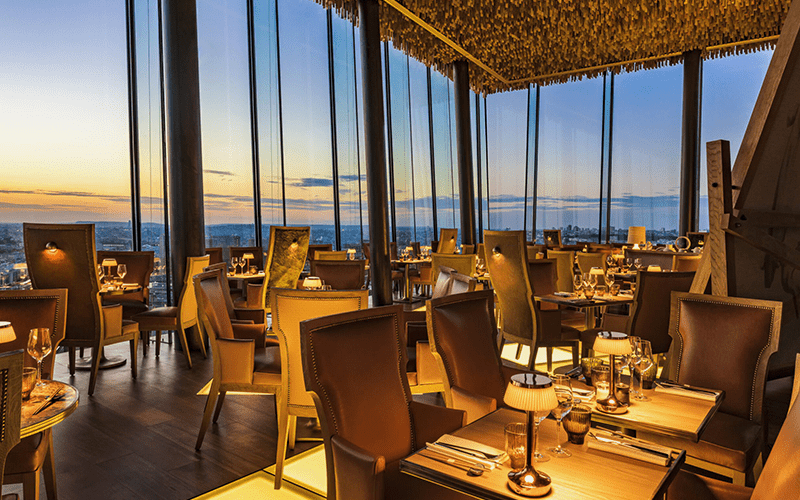
Common restaurant furniture includes dining tables, dining chairs, booths, sofas, bar stools, bistro tables, outdoor dining sets, dining cabinets, wine cabinets and baby chairs. The combination depends on the restaurant concept and layout.
The appropriate size depends on the restaurant type and available space. As general reference points, a 120 cm diameter round table can work for a larger dining group, while a rectangular table around 140 × 70 cm can provide a practical dining arrangement. Final dimensions should be adapted to the actual project.
Approximately 80 cm can be used as a practical minimum reference for allowing a dining chair to be pulled out and used comfortably. Larger clearances may be preferable where circulation or service movement is required.
A conventional dining table is often around 75 cm high. A dining chair seat height of approximately 45 cm can provide a useful starting point, but the complete table and chair combination should always be tested for comfort.
Simple dining tables and chairs with clean lines, restrained colors and practical construction generally work well in minimalist restaurants. Wood, metal, stone-look and upholstered materials can all be used depending on the desired atmosphere.
Rattan, teak, rope and other outdoor-suitable materials can work well for garden-style restaurants. The furniture should be selected according to exposure to moisture, sunlight, temperature changes and maintenance requirements.
Furniture should match the specific western restaurant concept. Classical restaurants may use solid wood and leather, garden restaurants may use natural outdoor materials, while modern western restaurants can combine materials such as wood, stone, leather, velvet and metal.
Lighting is extremely important because it affects atmosphere, visual comfort and how customers perceive food, furniture and materials. Localized lighting can highlight dining tables and architectural details while warm-colored lighting can contribute to a more intimate atmosphere.
Both are important, but comfort should not be sacrificed for appearance. Dining chairs, tables and circulation spaces are directly experienced by customers, so furniture dimensions and ergonomic comfort should be considered alongside the visual design.
Many contract furniture manufacturers can customize dimensions, materials, upholstery, colors and finishes according to project requirements. Buyers should confirm customization capabilities, sample approval procedures and production standards before placing a large order.
Looking for Restaurant Furniture for Your Next Project?
Lohabour develops and manufactures restaurant, café, hospitality and commercial furniture for international buyers. From dining tables and chairs to booths, sofas and outdoor furniture, we can develop solutions around your space, design concept, materials, dimensions and project requirements.
Discover Our Manufacturing