

Why is there such a large price difference between a USD 599 sofa and a USD 1,199 sofa when they appear almost identical in shape or look the same in photographs? This is one of the most common questions faced by furniture distributors, dealers and buyers when purchasing sofas online or comparing products in the market.
The answer is not always visible from the outside. A sofa can look almost identical to another sofa while having very different materials, internal construction, manufacturing processes and expected service life.
If we regard a sofa as a human body, the frame is the skeleton, the springs are the support and resilience system, the sponge is the muscle, and the upholstery is the skin. Design determines how the whole body looks and functions.
To understand the difference between a low-cost and a higher-value sofa, we therefore need to look beyond the surface. This sofa anatomy will examine the five major areas in sequence: frame, springs, sponge, fabric and design.
A sofa should not be judged only by what you can see. The biggest differences in value are often hidden inside.
Design is deliberately left until the end because design value is highly subjective. A designer sofa may be extremely valuable to one customer and completely unsuitable for another. There is no universal answer to which sofa is “best”. The objective is to understand where the value comes from so that buyers can choose according to their budget, application and target market.
For example, there may be little reason to purchase an expensive premium sofa for a rental property where the priority is simply reasonable durability and cost efficiency.
Our objective is therefore not to tell you which sofa you must buy. It is to dissect the sofa so that you can understand what you are actually paying for.
Many sofa-buying guides focus on fabrics, genuine leather, faux leather and sponge density because these are the components customers can easily see and touch. But some of the most important components are hidden underneath the upholstery, especially the frame and spring system.
Why Two Similar Sofas Can Have Completely Different Values
When comparing two sofas that look almost identical, it is natural to assume that the price difference comes mainly from the brand, fabric or design.
Those factors certainly influence price, but they are not the only explanation.
Two sofas with the same external dimensions and similar upholstery can contain completely different internal structures. The frame material, spring configuration, sponge construction, reinforcement and manufacturing process can all affect the final cost.
This is why photographs alone are often insufficient when comparing furniture suppliers. A sofa photograph shows the surface, but not necessarily the materials and construction underneath it.
For buyers sourcing furniture internationally, this distinction is particularly important. A supplier quotation should not be evaluated only by comparing the final unit price. The specifications behind that price need to be understood first.
A USD 599 sofa and a USD 1,199 sofa may therefore look similar while offering very different levels of structural strength, resilience, durability and comfort.
The first step in understanding this difference is to turn the sofa over and examine its skeleton.
The Sofa Frame Is the Skeleton of the Product
The frame is one of the most important structural components of a sofa, yet it is also one of the easiest components for consumers to ignore because it is hidden underneath the upholstery.
Many manufacturers provide a zipper underneath the sofa. This allows access to the internal structure for maintenance, inspection and sometimes replacement of components.
If you are evaluating a sofa for purchase, checking the bottom of the product can reveal significantly more information than simply examining the upholstery.
If there is no inspection opening or zipper, it becomes more difficult to verify what is inside. This does not automatically mean that the sofa is poorly constructed, but it does mean that the buyer has less opportunity to inspect the frame and spring system.
In general, sofa frames can be divided into three broad material categories: engineered or artificial panels, solid wood and metal or alloy structures.
The lowest-cost solution is generally a panel-based frame, often using plywood or other engineered wood products. Panel construction can be perfectly suitable for certain applications, particularly where purchase price is a major consideration.
For rental properties, temporary furniture or cost-sensitive projects, a panel frame may be a rational choice. The important point is simply to understand the trade-off rather than assuming that every sofa should use the same frame material.
The frame must ultimately provide sufficient structural strength, adequate toughness and appropriate resistance to biological and environmental deterioration.

Why Harder Does Not Automatically Mean Better
What properties should a material used for a sofa frame have?
At a basic level, the frame needs sufficient structural strength, adequate toughness and reasonable resistance to insects, moisture and deterioration depending on the application.
Structural strength includes properties such as hardness and nail-holding ability. This is important because the frame must hold the sofa structure together and provide a reliable base for attaching the spring system and other components.
It may therefore seem logical that the harder the frame material is, the better the sofa should be.
But this is not necessarily true.
A sofa is not a bridge or a machine base. It also needs a certain amount of resilience. When someone suddenly sits down, when several people sit on the sofa or when children jump onto it, the frame works together with the springs and cushioning system to absorb and distribute the load.
A material that is extremely hard but insufficiently resilient can behave differently from a material that combines strength with controlled flexibility.
This is one reason why extremely hard hardwoods and metal structures are not automatically the ideal choice for every indoor sofa. They can provide excellent structural strength, but the overall seating experience also depends on how the frame interacts with the spring and cushioning system.
The objective is therefore not maximum hardness. The objective is an appropriate balance between strength, toughness, resilience, durability and cost.
Pine, Birch, Ash and Beech: What Really Matters?
Natural wood remains one of the most common materials for sofa frames because it can provide a useful combination of structural strength, toughness, manufacturability and cost.
Fast-growing woods such as eucalyptus, poplar, pine and fir are widely used because they are relatively affordable and available in large quantities.
However, fast-growing wood does not automatically mean poor quality. The actual performance of a frame depends on the species, density, moisture content, drying process, grade, dimensions, joints and overall construction.
Pine is particularly common in furniture manufacturing because of its availability, relatively low cost and ease of processing. Imported pine is sometimes marketed using descriptions that make it sound significantly more advanced than ordinary pine.
The country of origin can certainly affect wood quality because growing conditions, species selection, grading and processing can differ. However, the word “imported” alone should not be treated as proof that one frame is automatically superior to another.
Other species such as birch, ash and beech can provide a different balance of strength, hardness and toughness. Birch, in particular, can offer a strong cost-to-performance balance for many sofa applications.
The correct choice depends on the required performance and budget. A manufacturer should therefore specify the actual wood species and construction rather than relying on vague marketing terms.
For buyers, the important question is not simply whether the frame is made from “high-end wood”. The important question is whether the selected wood is appropriate for the intended load, expected service life, manufacturing process and price level.

Where Does the Frame Price Difference Come From?
When comparing sofa frames by material value, a general price progression can be observed from panel-based construction to mixed or lower-grade wood, pine, birch, ash, beech, metal structures and premium hardwoods.
However, price ranking and performance ranking are not exactly the same thing.
A very expensive hardwood may provide exceptional hardness and strength, but that does not automatically make it the most appropriate material for a comfortable upholstered sofa.
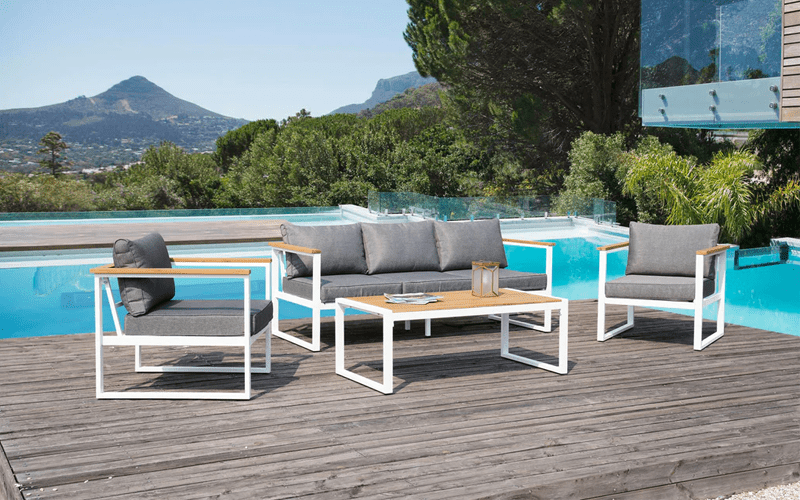
Similarly, a metal or alloy frame can be extremely durable and resistant to certain environmental conditions, making it particularly useful for outdoor furniture where exposure to moisture, sunlight and temperature changes is important.
For conventional indoor sofas, however, a properly selected solid-wood frame can provide an excellent balance between strength, resilience, manufacturability and cost.
This is why buyers should avoid evaluating a sofa frame simply by asking which material is the most expensive.
The more useful question is: which frame material and construction provide the required performance for the intended application at a reasonable cost?
For many buyers, the difference between a USD 599 and USD 1,199 sofa may therefore be partly explained by the quality and construction of the internal frame rather than by the visible upholstery alone.
The Spring System Is the Resilience Network of the Sofa
The frame is only the beginning. The next important component is the spring system.
Not every sofa uses springs. Some traditional or highly specialized sofas use solid wood boards or other rigid support systems combined with cushions.
Certain furniture designs also use webbing systems instead of conventional metal springs. These solutions can create a particular seating experience, but they also involve different compromises in resilience, support and durability.
For most modern upholstered sofas, however, serpentine springs are one of the most common support systems.
A serpentine spring, also known as a zigzag or bow spring, is manufactured from spring steel and formed into a continuous S-shaped profile.
These springs are installed across the sofa frame and work together with the frame and cushioning materials to provide support and controlled rebound when the user sits down.
Similar spring principles are also used in other upholstered applications, including some automotive seating systems.
The quality of a spring system is not determined simply by the name of the steel used. The actual geometry, wire diameter, spacing, arch height, number of springs and reinforcement method are all important.

Do Not Be Impressed by Marketing Terms Like High-Manganese Steel
Spring steel is a specialized material designed to provide a suitable combination of strength, elasticity and fatigue resistance.
Steel contains carbon, and carbon content influences hardness and mechanical properties. However, more carbon does not automatically mean a better sofa spring.
Spring steel can also contain manganese and other alloying elements. But marketing descriptions such as “high-manganese carbon steel” should not automatically be interpreted as evidence of superior sofa construction.
True high-manganese steels are a different class of material with much higher manganese content and are used for specialized applications where extremely high wear resistance is required.
For sofa springs, what matters more to the buyer is whether the spring has been correctly designed, formed and installed for the intended application.
Increasing hardness beyond the appropriate range can actually become counterproductive. Excessive hardness can reduce desirable resilience and may increase brittleness and fatigue-related failure.
The difference between a good and poor sofa spring system is therefore usually more meaningful when looking at geometry and installation rather than simply repeating a material marketing term.
Buyers should focus on measurable specifications and actual construction instead of assuming that a complicated material name means a better product.
Wire Diameter, Arch Height and Spacing Change the Cost
Once the spring material itself is understood, the next question is how the spring is actually configured inside the sofa.
Three important variables are wire diameter, arch geometry and spacing.
Wire diameter refers to the thickness of the spring steel wire. Common dimensions can include approximately 3.8 mm or 4 mm, although actual specifications vary by manufacturer and product.
Arch height refers to the geometry of the spring profile, while spacing describes the distance between adjacent spring elements.
Reducing the wire diameter, lowering the arch height and increasing the spacing between springs can reduce the amount of spring material and simplify assembly.
From a manufacturing perspective, this can reduce cost. From a performance perspective, however, the sofa may have less support and resilience.
Lower spring density can also increase the load carried by individual springs and influence how quickly the cushioning materials compress in heavily used areas.
Conversely, a denser spring arrangement with appropriate wire diameter and geometry can provide more consistent support and better load distribution.
This is one of the hidden differences that cannot be identified from a sofa photograph. Two sofas may have almost identical upholstery while having significantly different spring structures underneath.

Why High-Quality Sofas May Add Reinforcement
A well-designed spring system does not necessarily stop at the serpentine springs themselves.
Higher-quality sofa construction may incorporate reinforcing steel members, support rails or webbing to distribute loads more evenly across the spring system.
This becomes particularly important because people naturally tend to use the same favorite seats repeatedly.
If one position on a sofa receives most of the daily load, the springs and cushioning in that location can age faster than those in areas that are rarely used.
Over time, uneven loading can contribute to differences in cushion height, changes in seating comfort and localized loss of support.
A reinforcement system can help distribute forces across a larger part of the frame and reduce the concentration of load on individual springs.
This additional construction requires more materials, assembly time and manufacturing control, so the production cost naturally increases.
Again, this does not mean that every sofa needs the most complicated spring system available. The appropriate level of reinforcement depends on the sofa design, expected usage, target market and price level.
Why Are Sofa Springs Black, Silver, Gold or Other Colors?
Buyers may notice serpentine springs in different colors, including black, silver, gold or other finishes.
The visible color is generally related to surface treatment rather than a fundamentally different spring design.
Depending on the manufacturer, springs may receive coatings or surface treatments designed to reduce oxidation and improve corrosion resistance during storage and use.
A different color therefore does not automatically mean that one spring has a completely different mechanical performance from another.
The more important specifications remain the steel properties, wire diameter, geometry, spacing, spring density, attachment method and reinforcement system.
This is another useful lesson for furniture buyers: visible differences are not always the most important differences.
How Spring Construction Changes Sofa Value
When comparing spring systems by general manufacturing value, a basic configuration with smaller wire diameter, lower arch height, larger spacing and lower spring density will normally cost less than a system using larger wire diameter, stronger geometry and tighter spacing.
A reinforced construction using additional steel supports or webbing can increase the cost further because more materials and assembly processes are required.
However, price should always be considered together with the intended application.
A low-cost sofa designed for occasional use may not need the same spring specification as a premium residential sofa used every day by a large family.
Likewise, a commercial project may prioritize a different combination of durability, maintainability and cost depending on the expected traffic level.
The correct procurement strategy is therefore not to specify the most expensive spring system automatically. It is to establish a performance requirement and then select a spring configuration that satisfies that requirement efficiently.
This is the fundamental difference between understanding materials and simply chasing expensive materials.
How to Compare the Frame and Spring of Two Sofas
If you want to compare a USD 599 sofa with a USD 1,199 sofa, do not start with the price. Start with the specifications.
Ask the supplier what material is used for the frame and whether the frame is made from panels, solid wood, metal or a combination of materials.
Ask for the actual wood species rather than accepting generic descriptions such as “premium wood” or “imported wood”.
For the spring system, ask about the spring type, wire diameter, spring spacing, geometry, number of springs and reinforcement structure.
If possible, request photographs of the internal frame and spring system or inspect a sample physically.
The same principle applies to supplier quotations. If two factories quote very different prices, first determine whether they are actually quoting the same specification.
A lower price may be completely reasonable if the supplier uses a simpler frame, fewer springs or a different construction method. The problem occurs when two products are presented as equivalent even though their internal specifications are significantly different.
Professional furniture procurement therefore depends on comparing like with like.
What to Check Inside a Sofa Frame
Do not evaluate the frame only from the outside. Ask the manufacturer for the actual construction details.
- Identify whether the frame uses plywood, engineered panels, solid wood or metal.
- Ask for the actual wood species rather than generic marketing terms.
- Check the structural design and major load-bearing areas.
- Check whether joints are properly reinforced.
- Evaluate nail-holding and fastening capability where relevant.
- Consider the balance between hardness and toughness.
- Check whether the material is appropriate for the intended application.
- For outdoor sofas, evaluate resistance to moisture, sunlight and corrosion.
- Ask whether the frame can be inspected or accessed for maintenance.
- Compare frame specifications when evaluating different suppliers.
How to Evaluate Sofa Springs
Spring quality depends on more than the name of the steel. Look at the complete spring configuration.
- Identify the type of spring system used.
- Check the spring wire diameter.
- Check spring spacing and arrangement density.
- Check the spring arch or profile geometry.
- Ask how the springs are attached to the frame.
- Check whether additional reinforcement is used.
- Evaluate whether the spring configuration matches the expected usage level.
- Avoid judging spring quality from color alone.
- Do not assume marketing terms such as “high manganese” mean superior performance.
- Compare spring specifications between suppliers using identical product requirements.
Questions to Ask a Sofa Manufacturer
A professional supplier should be able to explain the internal construction of the sofa rather than only quoting the finished price.
- What material is used for the sofa frame?
- What wood species is used?
- What are the frame dimensions and main structural members?
- What type of spring system is used?
- What is the spring wire diameter?
- What is the spring spacing?
- How many springs are used per seat?
- Is additional reinforcement included?
- Can the supplier provide internal construction photographs?
- Can the approved sample be retained as a production reference?
- Are the quoted specifications documented in the purchase order?
- Are the specifications identical when comparing different suppliers?
The cheapest sofa is not necessarily the worst sofa, and the most expensive sofa is not necessarily the best. The real question is what materials and construction are hidden behind the price.
The difference between a USD 599 sofa and a USD 1,199 sofa cannot be understood simply by looking at the outside of the product.
The frame and spring system are two of the most important hidden components. They determine how the sofa supports the user, distributes loads and maintains its structural performance over time.
Panel-based frames can provide a cost-effective solution for certain applications, while properly selected solid woods can provide a stronger balance between strength, toughness, resilience and cost. Metal or alloy frames can become particularly useful where environmental resistance or specialized structural performance is required.
The same principle applies to springs. The quality of a sofa spring is not determined simply by a complicated material name or a particular surface color. Wire diameter, geometry, spacing, spring density, attachment and reinforcement all contribute to the final performance.
For buyers, the most important lesson is to compare specifications rather than marketing language. “Imported”, “high manganese”, “premium wood” and similar expressions should never replace actual technical information.
A professional furniture buyer should therefore ask what is inside the sofa, how it is constructed and whether the specification matches the intended application.
There is no single material that is automatically the best for every sofa. A rental property, hotel project, residential living room and luxury showroom may all require different levels of performance.
The right sofa is therefore not necessarily the most expensive one. It is the one whose frame, spring system, cushioning, upholstery and design provide the appropriate combination of quality, comfort, durability and value for its intended market.
In Part 2, we continue the anatomy of the sofa by examining the sponge, upholstery materials, leather, technical fabrics, natural fibers, synthetic fibers and advanced textile constructions that create another major part of the difference between low-cost and high-value sofas.
Two sofas can look almost identical while using different frame materials, spring systems, cushioning structures, upholstery materials and manufacturing processes. The visible design therefore does not necessarily reveal the complete manufacturing cost.
There is no single best material for every application. Properly selected solid wood can provide a strong balance of strength, toughness and cost, while panel frames can be suitable for cost-sensitive applications and metal frames can be useful for specialized or outdoor furniture.
No. A sofa frame needs sufficient structural strength but also appropriate toughness and resilience. Excessive hardness does not automatically produce better seating performance. The frame needs to work together with the springs and cushioning system.
No. Country of origin alone does not determine wood quality. Species, grade, density, moisture content, drying, dimensions, joints and construction are all important. Buyers should evaluate the actual wood specification rather than relying on the word “imported”.
Serpentine springs are S-shaped or zigzag spring-steel elements installed across a sofa frame to provide support and resilience. They are one of the most common spring systems used in upholstered sofas.
Not necessarily. Spring performance depends on the complete material and engineering specification, including wire diameter, geometry, spacing, spring density and installation. Marketing terminology should not replace actual technical specifications.
Larger wire diameter, stronger spring geometry, tighter spacing, higher spring density and additional reinforcement can all increase material and manufacturing costs. These features can also improve support and load distribution when properly designed.
Ask the manufacturer for the actual frame material, wood species, structural construction and internal photographs. If possible, inspect the underside or an approved sample and compare the specifications directly rather than relying on photographs of the finished sofa.
Make sure suppliers are quoting the same specifications. Compare frame material, wood species, spring type, wire diameter, spring spacing, reinforcement, cushioning, upholstery and other relevant construction details before comparing the final unit price.
No. The appropriate sofa depends on the application, target market, expected usage, required durability, comfort level and budget. The objective is to understand the differences and choose the specification that provides the right value for the intended use.
Looking for a Sofa Manufacturer That Understands What Is Inside the Product?
Lohabour develops and manufactures sofas for international buyers, distributors, hospitality projects, residential developments and OEM programs. We can work with specific requirements for frame construction, spring systems, cushioning, upholstery materials, dimensions, comfort and quality standards.
Discover Our Manufacturing