
In Part 1, we examined the internal structure of a sofa, including the frame and spring system. In this article, we continue the anatomy of the living room sofa by looking at the materials that determine much of its comfort, appearance, durability and price.
The first material to examine is foam. Although consumers often talk about “sponge density” as if one number can determine whether a sofa is good or bad, the reality is much more complicated. Density, hardness, layering, processing technology and additional cushioning materials all influence the final sitting experience.
We will then move to the exterior materials that consumers see and touch every day: leather and fabric. Terms such as full-grain leather, split leather, microfiber leather, eco-leather, PU leather, technical fabric, linen, wool, viscose, velvet and suede can make sofa specifications appear complicated. Understanding their basic structure makes it much easier to compare manufacturers and quotations.
The important point is that there is no single material that automatically makes a sofa “good” or “bad”. The correct question is whether the material, construction and manufacturing process match the intended product positioning, comfort level, durability and budget.
A sofa is not expensive simply because it uses an expensive material. Its value comes from how materials, construction and manufacturing processes work together.
For buyers comparing different furniture manufacturers, this distinction is essential. Two sofas may look almost identical in photographs while having very different internal structures and material specifications.
The following analysis explains where those differences can come from and what buyers should actually look for when comparing sofas.
The Foam Inside a Sofa Is More Important Than a Single Density Number
Most modern sofa foam is made from synthetic polymer-based materials. Natural sponge also exists in nature, but it is not a practical substitute for the foam used in commercial sofa manufacturing.
Natural sea sponges are living organisms with a very different structure from industrial polyurethane foam. Their production is limited, their price is high, their pores are relatively large and their physical characteristics are unsuitable for producing the structured cushioning systems required in modern sofas.
For this reason, when comparing ordinary sofa manufacturers, the important differences are generally not the basic origin of the foam but its formulation, foaming process, density, hardness, structure and processing technology.
This is where two sofas with apparently similar designs can become very different products.
A low-cost sofa may use a relatively simple foam construction, while a higher-quality sofa can combine several foam densities and cushioning layers to achieve a more controlled balance between support, softness and resilience.
The manufacturing process therefore matters just as much as the name of the material itself.
What Is the Difference Between a $599 and $1,199 Sofa?
When buyers compare two sofas priced at approximately $599 and $1,199, they often expect to find one obvious difference. In reality, the price difference can come from many components, and foam construction is one of them.
Foam quality is influenced by the formulation and foaming process as well as density. Poorly manufactured foam can have inferior physical properties and may be easier to damage or tear when subjected to excessive force.
However, density alone should not be treated as a complete quality test. A higher-density foam is not automatically more comfortable, and a lower-density foam is not automatically unsuitable.
A sofa cushion needs to provide the correct combination of support and comfort. A very high-density foam can feel extremely firm if it is used without an appropriate softer transition layer.
This is why professional sofa manufacturers often use several foam layers rather than relying on one material throughout the cushion.
The goal is to control how the cushion responds when a person sits down, how quickly it returns to its original shape and how the pressure is distributed across the seating surface.

Why High-Density Foam Does Not Automatically Mean a Better Sofa
One of the most common pieces of sofa-buying advice found online is to simply choose 45D foam or another high-density specification.
This advice is incomplete.
A cushion made entirely from very high-density foam can feel excessively hard. Sitting on extremely firm foam can be closer to sitting on a rigid surface than experiencing the soft, supportive and enveloping sensation that many consumers expect from a premium sofa.
A more sophisticated construction can use different foam densities in different layers.
For example, a manufacturer may use approximately 45D or 50D foam in the lower support layer. This provides structural support and works together with the sofa frame and spring system to absorb loads and maintain the cushion structure.
A medium-density layer, such as approximately 35D or 40D, can then act as a transition between the firm support layer and the softer surface.
The upper layer may use a softer foam, such as approximately 25D or 30D, to create a more comfortable contact surface and greater softness.
The exact densities should not be treated as universal rules. The correct specification depends on cushion dimensions, foam formulation, hardness, intended use and the overall construction of the sofa.
The important principle is the layered design: support underneath, controlled transition in the middle and comfort at the surface.
Foam, Latex and Feathers Create Different Sitting Experiences
Once the basic foam structure is established, manufacturers can add additional cushioning materials to change the sensation of the sofa.
Latex can provide a distinctive combination of elasticity, resilience and softness. Feather layers can create a softer and more relaxed surface feeling.
These materials are not automatically better for every consumer. They simply create different comfort characteristics and increase material and manufacturing costs.
A premium cushion may therefore combine a structural foam base with softer upper materials rather than using a single material throughout.
There is also another construction method in which individual pocket springs are incorporated into the cushion itself. This can increase resilience and create a distinctive response when the user sits down.
However, additional spring systems increase manufacturing complexity and can produce a different sensation from the deeply enveloping feeling associated with soft feather-filled cushions.
For many modern sofas, a multi-layer foam structure remains a practical compromise between support, comfort, durability and manufacturing cost.
The best construction therefore depends on the desired sitting experience rather than on the number printed on the foam specification sheet.

What Is Inside a Sofa Backrest?
The construction of the backrest is different from the seat cushion because the body weight and pressure distribution are different.
A fixed upholstered backrest will commonly use relatively soft foam. Lower-density foam can provide the softness required for leaning without creating excessive resistance.
Loose back cushions can use different filling systems, including synthetic fiber fillings and feather blends.
Synthetic fiber fillings used in cushions are designed to provide volume, air permeability and resilience. However, fiber alone may not create the relaxed wrapping sensation associated with higher-end loose cushions.
For this reason, some manufacturers combine synthetic fiber with small feathers. The feathers can soften the response, improve the relaxed feeling and create a more natural compression when the user leans against the cushion.
It is important to distinguish feathers from down. They have different physical characteristics and are used for different purposes.
Down is extremely soft and lightweight but has limited structural resilience. In a sofa back cushion, using only down would create a very soft filling that can lose its volume rapidly when compressed.
Feathers provide more structure and resilience while still producing a soft and flexible cushion. They are therefore often more practical for upholstered furniture.
A feather-filled cushion can also make a subtle rustling sound when compressed. The recovery is generally slower than a cushion filled primarily with synthetic fiber.
Understanding Leather: Full Grain, Corrected Grain and Split Leather
After the internal cushioning system, the next major material is the upholstery itself. Leather is one of the most valuable and misunderstood sofa materials.
Cowhide is naturally much thicker than the leather used on a finished sofa. The raw hide contains several layers and normally needs to be processed and separated before it becomes a usable upholstery material.
The outermost usable layer is generally referred to as top-grain or top-layer leather. Because it comes from the outer part of the hide, it retains much of the natural structure and physical performance of the original material.
Full-grain leather retains the natural grain surface with minimal correction. Because the surface remains relatively natural, scars, insect marks and other characteristics of the animal may remain visible.
Corrected or lightly corrected grain leather may undergo sanding or other surface treatment to reduce visible imperfections. The amount of correction influences the final appearance and tactile characteristics.
This is one reason full-grain leather is relatively scarce and expensive. A natural animal hide is not a manufactured sheet with perfectly uniform characteristics.
The more natural the surface, the more important the quality and selection of the original hide become.
Buyers should therefore be cautious when a sofa is advertised simply as “genuine leather”. The phrase alone does not provide enough information about the grade, structure or finishing process of the leather.

Split Leather, Microfiber Leather, PU and PVC Are Not the Same Material
Once the original hide is separated into layers, the structure changes significantly.
Split leather comes from the lower layer of the hide. Because its original surface grain has been removed, manufacturers can apply coatings and embossed patterns to create a more uniform appearance.
This allows split leather to visually resemble higher-grade leather while being significantly less expensive than premium full-grain material.
Technology has also created increasingly sophisticated alternatives based on synthetic substrates.
Microfiber leather uses an ultra-fine fiber structure as its base material and can be combined with a polyurethane surface layer. High-quality microfiber leather can provide impressive mechanical properties, consistency and tactile performance.
PU leather uses polyurethane as the primary surface coating over a suitable textile or non-woven base. PVC leather uses polyvinyl chloride instead.
There is therefore a broad spectrum of materials between traditional top-grain leather and basic synthetic leather.
The value ranking is not always perfectly linear because manufacturing quality matters. A technically advanced microfiber leather can outperform an inferior split leather in certain properties and can cost more.
Buyers should therefore evaluate the actual specification rather than assuming that every natural material is automatically superior to every synthetic alternative.
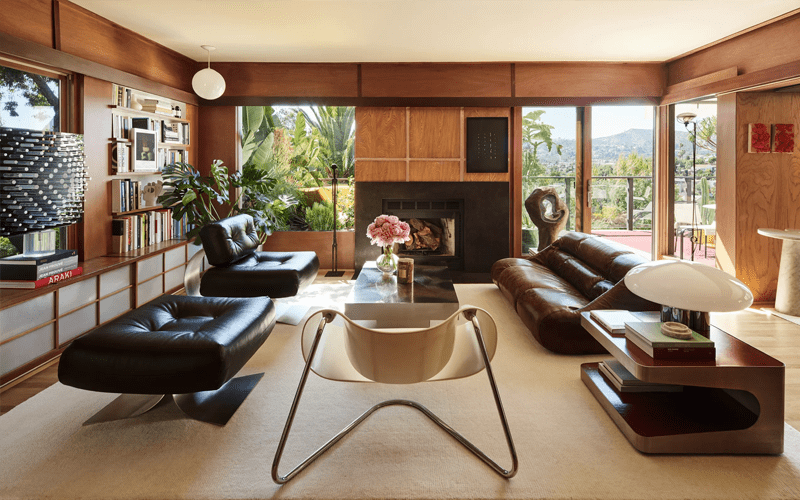
How Can You Tell What Kind of Leather a Sofa Really Uses?
Many online articles recommend burning, dripping water on or smelling leather to determine its quality. These methods can sometimes provide clues, but they are not reliable enough for ordinary buyers to identify every modern leather construction.
Modern materials can combine natural leather fibers, synthetic substrates, polyurethane coatings, pigments and embossed surfaces. As a result, visual and tactile tests can become surprisingly difficult to interpret.
The most practical approach for a buyer is to examine the cross-section of the material when possible.
The structure of a genuine natural leather surface differs from a synthetic coated material. A cut sample can reveal whether the material consists of a natural fibrous structure, a split base with a coating or a synthetic textile substrate.
Buyers purchasing sofas from manufacturers should therefore request a physical material sample whenever leather specification is important.
The sample should be clearly identified and, for important orders, the agreed material specification should be included in the purchase contract or product documentation.
This provides much stronger protection than relying on a salesperson saying that a sofa is simply “real leather”.
What Is Technical Fabric? It May Be Closer to Microfiber Leather Than You Think
After leather, fabric is the other major category of sofa upholstery. One material that has become increasingly common in recent years is often marketed as technical fabric.
Despite the name, technical fabric is not necessarily a conventional woven textile made entirely from natural or synthetic yarns.
Many technical fabrics use a microfiber substrate combined with a polyurethane coating. The manufacturing process adjusts the structure and surface treatment so that the final material feels and looks more like textile fabric.
This means that, from a material-structure perspective, some technical fabrics are closely related to microfiber leather.
The difference is primarily in how the surface is engineered to create the desired tactile and visual properties.
This is an important point for buyers because product names can sometimes create the impression that two materials are fundamentally different when their underlying structures are actually quite similar.
Once the marketing terminology is removed, buyers can focus on the material composition, performance, abrasion resistance, breathability, maintenance requirements and actual manufacturing quality.
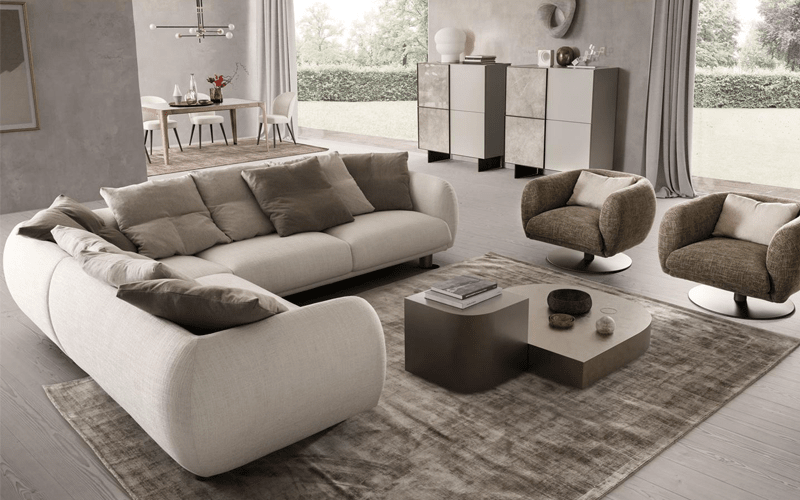
Natural and Synthetic Fibers Used in Sofa Fabrics
Traditional sofa fabrics are produced from textile fibers processed through different spinning, weaving, knitting and finishing technologies.
The major distinction is between natural fibers and manufactured fibers.
Natural fibers include plant fibers such as cotton and linen, as well as animal fibers such as wool and silk.
Cotton is soft, breathable and highly absorbent, with good dyeing characteristics. One of its limitations is dimensional stability, particularly shrinkage, which is why cotton is frequently blended with other fibers.
Linen is a bast fiber known for strength, breathability and good abrasion resistance. It also wrinkles relatively easily. Combining linen with cotton can create a fabric that balances the softness of cotton with the strength and texture of linen.
Synthetic and regenerated fibers provide another large group of materials. Polyester is particularly widespread because of its mechanical strength, elasticity, dimensional stability, wrinkle resistance and relatively easy-care characteristics.
Acrylic is often used when manufacturers want a material with characteristics resembling wool. It can provide softness and warmth while offering different performance and maintenance characteristics.
Viscose is different from conventional synthetic fibers because it is a regenerated cellulose fiber derived from natural cellulose sources such as wood pulp. Modal and lyocell are related regenerated-cellulose developments with their own performance characteristics.
No single fiber is perfect. The final fabric performance depends on fiber selection, blending ratio, yarn construction, weaving or knitting method and finishing technology.

Wool, Silk and Blended Fabrics: Why Some Textiles Cost More
Among natural animal fibers, wool has a distinctive combination of elasticity, warmth and texture. These characteristics make high-quality wool attractive for premium upholstery.
The disadvantages are equally clear: high-quality wool can be expensive, more difficult to maintain and potentially less comfortable in hot climates depending on the fabric construction.
Blending wool with synthetic or regenerated fibers can change the balance between softness, durability, cost and maintenance.
Silk occupies an even more specialized position. Historically associated with luxury interiors, silk can create an exceptionally refined visual and tactile effect.
Silk upholstery is relatively uncommon in mainstream sofa production because the material is expensive and less resistant to abrasion than many modern upholstery alternatives.
This illustrates an important principle when comparing sofa prices: an expensive material is not necessarily a better material for every application.
The correct question is whether its characteristics are useful for the intended environment.
A family sofa used every day may benefit more from a durable blended textile than from an extremely delicate luxury fiber. A decorative statement piece in a premium interior may justify the opposite decision.
Velvet, Fleece and Suede Are Often About Processing, Not Just Raw Materials
The anatomy of sofa fabric becomes more interesting when we look beyond the raw fiber itself.
Velvet and other raised-surface fabrics are often created through specialized finishing processes rather than simply using a completely different raw material.
During napping or similar processes, fibers are raised from the yarn or fabric surface to create a soft, dense and visually rich texture.
Different fibers and processing methods can produce different types of velvet, fleece and plush fabrics. This is why the market contains a very large number of names for materials that may share similar underlying fibers but use different manufacturing techniques.
Suede-style upholstery is another interesting example. Natural suede has a distinctive matte texture and tactile quality, but protected animal species and high material costs mean that modern sofa manufacturers commonly use synthetic alternatives.
Synthetic suede can combine polyester microfibers, specialized textile structures, napping processes and polyurethane treatment to reproduce many of the visual and tactile characteristics of natural suede.
The result can be a highly sophisticated upholstery material that provides the desired appearance without requiring the use of rare or impractical natural leather.
This is another reason why buyers should not judge a sofa solely by the material name. The manufacturing process can be just as important as the raw material.
3D Knitted Fabrics and New Upholstery Technologies
Textile innovation is not limited to changing the fiber itself. Manufacturers can also change the three-dimensional structure of the textile.
Three-dimensional knitted fabrics are an example of this approach.
Instead of relying primarily on a new raw material, the manufacturer creates a sophisticated knitted structure that changes elasticity, softness, air permeability and visual depth.
The result can be a fabric with a noticeably different tactile response from conventional woven upholstery.
This demonstrates how difficult it can be to classify modern sofa fabrics simply as cotton, polyester, wool or another fiber.
Two fabrics may use the same basic fiber but perform very differently because of their yarn construction, knitting or weaving structure and finishing process.
For furniture manufacturers, this creates opportunities to develop differentiated products without necessarily relying on expensive raw materials.
For buyers, it means that a material comparison should consider both composition and construction.

Which Sofa Fabric Should You Choose?
There is no universally best sofa fabric.
The correct material depends on the environment, usage frequency, desired appearance, maintenance requirements, customer expectations and budget.
If the sofa is used intensively by a family every day, durability, abrasion resistance and easy maintenance may be more important than the prestige of the fiber itself.
If the sofa is intended for a luxury hospitality environment, the visual effect, tactile experience and design identity may justify more sophisticated fabrics.
For residential customers who use sofa covers or cushions, the appearance of the underlying upholstery may also become less important.
The best approach is therefore to evaluate fabric by touch, appearance and intended use while also asking the manufacturer for the actual material composition and performance specifications.
When possible, obtain physical samples. Photographs cannot communicate the full tactile characteristics of a textile.
A professional sofa manufacturer should be able to provide material samples and explain the differences between available upholstery options.
Why Better Materials and More Complex Processes Increase Sofa Prices
The difference between a lower-priced sofa and a higher-priced sofa is rarely caused by one component alone.
A simple foam cushion costs less than a multi-layer cushioning system. A multi-layer system costs less than a system that adds latex, feather or other premium cushioning materials.
Similarly, basic synthetic upholstery can cost less than advanced microfiber materials, sophisticated textiles, premium wool blends or natural leather.
However, raw-material cost is only one part of the equation.
More sophisticated materials can require more complex cutting, sewing, upholstery, finishing and quality-control processes. Skilled labor and production time therefore become part of the final cost.
This creates a general progression in material value: simple single-layer construction tends to cost less than multi-layer construction, while additional premium materials and complex processing increase manufacturing cost further.
The exact ranking is never absolute. A high-quality synthetic textile can cost more than an inexpensive natural fabric, and an advanced microfiber leather can outperform a poorly processed natural leather in specific applications.
The correct way to compare two sofas is therefore to compare the complete specification rather than focusing on one material name or one density number.
How Can You Actually Check the Materials Inside a Sofa?
The easiest way to verify a sofa cushion is to look for a zipper. Many removable seat cushions have a zipper that allows the buyer to inspect the internal construction.
When a zipper is available, buyers can directly examine the foam layers and, where appropriate, the additional filling materials.
If there is no zipper, verification becomes more difficult. This is precisely why material specifications should be agreed before production rather than discovered after delivery.
For commercial projects and large furniture orders, buyers should request material samples and detailed specifications before approving production.
The approved sample should be clearly identified and linked to the purchase documentation. This reduces the risk of receiving a product that visually resembles the approved model but uses different internal materials.
For leather and fabric, the same principle applies. Obtain physical samples, identify them clearly and make sure the agreed material specification is reflected in the purchasing documents.
A professional sourcing process should make the material specification verifiable rather than relying entirely on verbal promises.
How to Evaluate Sofa Foam
Do not judge sofa foam only by its density. Look at the complete cushioning construction.
- Check the foam density and hardness specifications.
- Ask whether the cushion uses one foam layer or multiple layers.
- Check whether a firmer support layer is used underneath.
- Check whether softer transition and comfort layers are included.
- Ask whether latex, feathers or other cushioning materials are used.
- Check whether the seat cushion uses pocket springs or another support system.
- Request a physical sample when the order is important.
- Compare the actual sitting experience rather than relying only on specifications.
- Confirm that the approved cushion construction is documented.
- Do not assume that higher density automatically means greater comfort.
How to Evaluate Leather Upholstery
“Genuine leather” is not a sufficient specification. Ask what type of leather is actually being used.
- Confirm whether the material is full-grain, corrected-grain or split leather.
- Ask how much surface correction has been applied.
- Check whether the leather is natural or heavily coated.
- Ask whether the material uses a synthetic backing or coating.
- Distinguish natural leather from microfiber, PU and PVC alternatives.
- Request a physical leather sample.
- Inspect the cross-section when possible.
- Confirm the agreed leather specification in the purchasing documentation.
- Do not rely only on terms such as “genuine leather” or “top leather”.
How to Evaluate Sofa Fabric
Fabric performance depends on fiber, construction and finishing technology.
- Check the actual fiber composition.
- Determine whether the fabric is woven or knitted.
- Ask whether the material is a technical fabric or conventional textile.
- Check abrasion and durability requirements for the intended environment.
- Evaluate softness and tactile comfort.
- Consider breathability and maintenance requirements.
- Check whether the fabric is blended with multiple fibers.
- Understand whether velvet or fleece effects come from finishing technology.
- Request physical samples rather than evaluating only photographs.
- Compare the fabric specification with the target price of the sofa.
Compare the Complete Sofa Specification
When comparing manufacturers, evaluate the complete construction rather than one material or one price.
- Compare the internal frame.
- Compare the spring system.
- Compare foam density and layering.
- Compare backrest filling.
- Compare leather or fabric specifications.
- Compare manufacturing and finishing processes.
- Compare workmanship and quality control.
- Compare packaging and delivery protection.
- Compare warranty and after-sales support.
- Compare the complete specification against the final quotation.
The difference between a cheap sofa and an expensive sofa is rarely one material. It is the combination of materials, construction, processing technology, workmanship and quality control.
The anatomy of a sofa becomes much more interesting once we look beyond its exterior appearance.
A $599 sofa and a $1,199 sofa can look remarkably similar in a showroom or online photograph. The differences may be hidden inside the cushion, behind the upholstery and within the manufacturing processes used to produce the finished product.
Foam is a good example. Density matters, but density alone does not determine comfort. A carefully engineered multi-layer cushion can provide a better balance between support, softness and resilience than a single layer of very high-density foam.
The same principle applies to leather. “Genuine leather” does not describe a sufficiently precise quality level. Full-grain leather, corrected-grain leather, split leather, microfiber leather, PU and PVC represent different structures, manufacturing processes and price levels.
Modern textile technology makes the situation even more complex. Technical fabrics, microfiber materials, blended fibers, velvet, synthetic suede and three-dimensional knitted fabrics demonstrate how raw materials and processing technologies can be combined to create very different performance and visual characteristics.
This is why professional furniture buyers should avoid choosing sofas based solely on a single number, a marketing name or the lowest quotation.
Instead, compare the complete construction: frame, springs, foam, cushioning layers, backrest filling, upholstery material, finishing, workmanship and quality control.
For consumers, the most important question is not necessarily whether the sofa contains the most expensive materials. It is whether the construction creates the comfort, durability, appearance and maintenance characteristics that match the way the sofa will actually be used.
For furniture buyers and sourcing companies, the objective is even broader. The supplier should be able to explain the material specification clearly, provide samples and consistently reproduce the approved product during mass production.
Ultimately, the difference between a $599 sofa and a $1,199 sofa is not simply the amount of money spent on materials. It is the value created by the complete manufacturing system behind the sofa.
The difference can come from the frame, springs, foam construction, upholstery, workmanship, manufacturing processes, quality control and finishing. A higher price does not automatically mean better quality, so the complete specification should be compared.
No. Foam density alone does not determine comfort. A very high-density foam can be too firm if used incorrectly. Multi-layer foam constructions can combine firmer support foam with softer upper layers to create a better balance between support and comfort.
There is no single universal density that is correct for every sofa. The appropriate density depends on the foam formulation, hardness, cushion construction, intended use and position within the sofa. A professional manufacturer should select the specification according to the complete cushion design.
Full-grain leather is a premium natural material with a distinctive natural surface and physical characteristics. High-quality microfiber leather is a sophisticated engineered alternative with excellent consistency and performance. The better choice depends on the application, desired appearance, durability requirements and budget.
Yes, split leather is derived from natural animal hide, but it comes from the lower layer after the hide has been separated. Its surface is commonly processed or coated to create a more uniform appearance, so it should not be confused with full-grain leather.
Many technical fabrics use a microfiber substrate combined with a polyurethane coating and specialized surface processing. The structure can be similar to microfiber leather, but the surface is engineered to provide a more textile-like appearance and feel.
No. Natural and synthetic fibers have different strengths and weaknesses. Polyester, for example, can provide excellent durability and dimensional stability, while cotton, linen, wool and silk offer different tactile and visual characteristics. The best choice depends on the application.
Feathers can create a softer, more relaxed and enveloping cushion response while maintaining more structure and resilience than down alone. They are often combined with synthetic fiber or foam to balance softness, volume and recovery.
If the cushion has a zipper, you can usually inspect the internal foam layers directly. For sofas without accessible cushions, request material specifications and physical samples from the manufacturer before placing the order.
Compare the complete specification rather than price alone. Review frame construction, springs, foam density and layering, backrest filling, upholstery materials, workmanship, finishing, quality control, packaging, warranty and supplier reliability.
Looking for a Sofa Manufacturer That Understands Materials?
Lohabour works with international furniture buyers, designers, distributors, hospitality projects and residential developments to develop and manufacture sofas according to specific requirements for construction, foam, upholstery, leather, fabric, dimensions, comfort and quality.
Discover Our Manufacturing